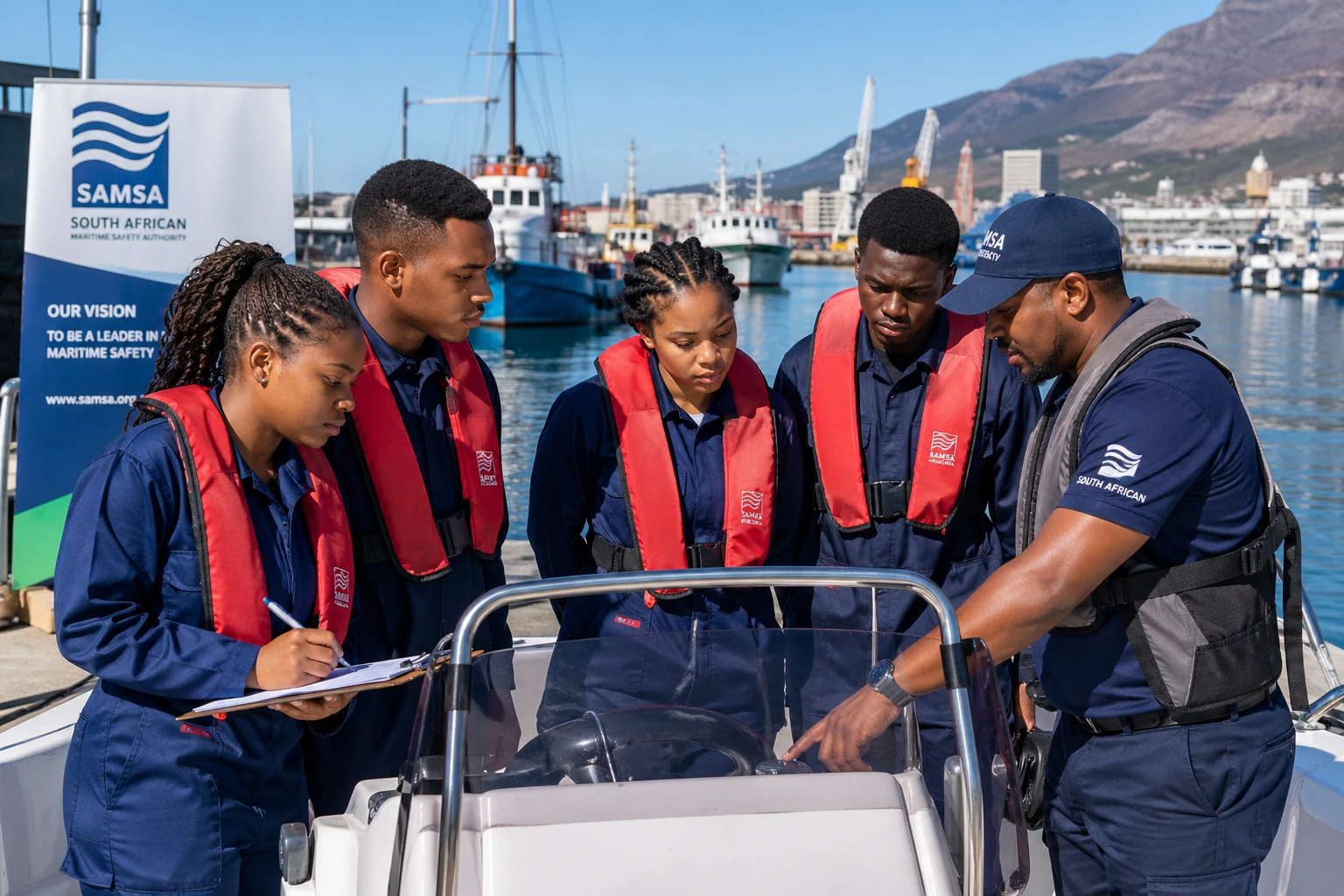
The SAMSA Maritime Training Programme 2026 offers unemployed seafarers a 24-month Work Integrated Learning opportunity with a R10,000 stipend. Here’s what it means, who qualifies, and why it matters now.
Introduction: Why the SAMSA Maritime Training Programme Matters Now
South Africa’s maritime sector sits at a critical intersection of trade, safety, and economic growth. Yet, for many qualified seafarers, the transition from classroom knowledge to real-world industry experience remains a stubborn barrier. That’s exactly where the SAMSA Maritime Training Programme 2026 enters the conversation.
With youth unemployment still a defining challenge and skills mismatches limiting access to specialised industries, structured workplace learning programmes are no longer optional—they are essential. The SAMSA Maritime Training Programme offers more than just a stipend; it provides a rare bridge into a tightly regulated and experience-driven sector.
For candidates who already hold maritime qualifications but lack practical exposure, this programme could be the difference between stagnation and career momentum.
ALSO CONSIDER APPLYING FOR Moses Kotane Research Institute ICT Experiential Learnership 2026: Apply Now
Quick Facts: SAMSA Maritime Training Programme 2026
- Closing Date: 06 May 2026
- Location: Richards Bay, Durban, East London, Gqeberha, Mossel Bay
- Duration: 24 months
- Positions Available: 10
- Reference Number: SAMSA-MTP-2026-001
- Stipend: R10,000 per month
- Required Gender: Not stated in the official advert
- Company: South African Maritime Safety Authority (SAMSA)
Understanding the SAMSA Maritime Training Programme 2026
At its core, the SAMSA Maritime Training Programme 2026 is a Work Integrated Learning (WIL) initiative under the Small Vessel Regime. But that label doesn’t fully capture its strategic importance.
This programme is designed to embed participants directly into maritime safety operations. Instead of simulated training environments, candidates engage with real-world systems—supporting vessel inspections, compliance checks, and safety initiatives.
This reflects a broader shift in skills development policy across South Africa. Increasingly, institutions are moving away from theory-heavy pathways toward applied, competency-based training models. In sectors like maritime safety—where regulatory compliance and risk management are non-negotiable—this approach is especially critical.
The inclusion of mentorship further strengthens the programme’s value. Learning under experienced surveyors exposes candidates to decision-making processes that cannot be taught in lecture halls.
The Experience Gap in Maritime Careers || SAMSA Maritime Training Programme 2026
One of the biggest structural challenges in maritime careers is the experience paradox: employers require experience, but entry-level candidates struggle to obtain it.
The SAMSA Maritime Training Programme 2026 directly addresses this issue.
Unlike generic internships, this programme places participants in environments where they actively contribute to:
- Vessel inspections and surveys
- Maritime compliance monitoring
- Safety awareness campaigns
- Operational support across ports and inland waters
This exposure is significant because maritime safety is a high-stakes field. Errors can result in environmental damage, financial loss, or even loss of life. As a result, employers prioritise candidates who understand operational realities—not just theoretical frameworks.
By the end of the 24-month period, participants are likely to have developed:
- Practical inspection skills
- Regulatory awareness
- Reporting and documentation competence
- Situational judgment in maritime environments
These are precisely the competencies that make candidates employable in this sector.
Financial Accessibility: The Role of the R10,000 Stipend
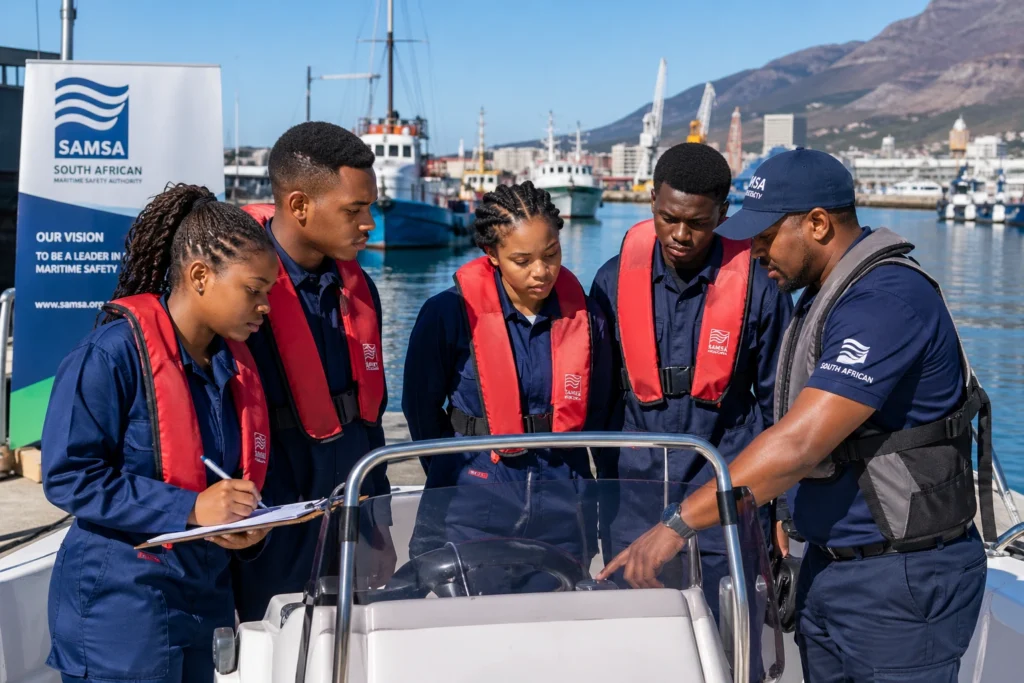
The inclusion of a R10,000 monthly stipend is not just a financial perk—it’s a strategic enabler.
Many unemployed graduates and seafarers cannot afford to participate in unpaid training opportunities, especially those located far from home. By offering a consistent income, the SAMSA Maritime Training Programme 2026 removes a key barrier to entry.
From a policy perspective, stipends play an important role in:
- Increasing participation rates
- Reducing dropout risk
- Allowing candidates to focus fully on training
In South Africa’s current economic climate, where cost-of-living pressures are rising, a stipend at this level significantly improves programme accessibility.
However, it’s important to understand that the stipend is not equivalent to a salary. It is designed to support learning—not replace long-term employment income.
Geographic Placement and Industry Exposure || SAMSA Maritime Training Programme 2026
The programme’s placement locations—Durban, Richards Bay, East London, Gqeberha, and Mossel Bay—are not random selections. These areas represent key maritime activity hubs in South Africa.
Each location offers distinct exposure:
- Durban and Richards Bay: Major commercial ports with high vessel traffic
- Gqeberha and East London: Strategic regional ports with diverse operations
- Mossel Bay: Coastal and smaller-scale maritime activities
This geographic diversity ensures that participants gain broad industry exposure, rather than a narrow, location-specific experience.
Importantly, the programme also includes inland water environments such as dams. This reflects the scope of the Small Vessel Regime, which covers more than just large commercial shipping.
For candidates, this means developing adaptability—an essential trait in maritime careers.
Who Stands to Benefit Most?
The SAMSA Maritime Training Programme 2026 is not designed for complete beginners. It targets candidates who already have a foundation in maritime studies.
Ideal applicants include: SAMSA Maritime Training Programme 2026
- Unemployed seafarers needing practical experience
- Graduates with maritime diplomas or certificates
- Candidates with a Certificate of Proficiency
- Those with basic knowledge of maritime safety regulations
A BSc in Nautical Science is listed as an advantage, indicating that the programme values academic depth combined with practical readiness.
However, beyond qualifications, certain soft skills are critical: SAMSA Maritime Training Programme 2026
- Communication and report writing
- Attention to detail
- Ability to work in varied environments
- Willingness to learn under supervision
Candidates who tailor their applications to highlight these attributes are likely to stand out.
The Competitive Reality: Only 10 Positions Available
While the opportunity is valuable, it is also highly competitive.
With only 10 positions available nationwide, the SAMSA Maritime Training Programme 2026 will attract a large pool of applicants. This scarcity increases the importance of application quality.
Key differentiators may include:
- Clear documentation of maritime qualifications
- Evidence of sea-going exposure (if available)
- Demonstrated understanding of maritime safety
- Well-structured, targeted CVs
Applicants who submit generic applications risk being overlooked. In competitive programmes like this, clarity and relevance matter more than volume.
What This Means Going Forward-SAMSA Maritime Training Programme 2026
The SAMSA Maritime Training Programme 2026 reflects broader trends in South Africa’s skills development landscape.
Firstly, it highlights the growing emphasis on Work Integrated Learning as a solution to unemployment. Traditional education pathways alone are no longer sufficient.
Secondly, it signals increased collaboration between government bodies—such as SAMSA and the Department of Transport—to address sector-specific skills gaps.
Looking ahead, programmes like this could:
- Become more common across specialised industries
- Influence hiring standards toward experience-based criteria
- Strengthen South Africa’s maritime safety capacity
For candidates, the implication is clear: gaining practical, workplace-based experience is becoming just as important as formal qualifications.
How Can Candidates Submit Their Applications?
Applications must be submitted through the official SAMSA online application portal.
Applicants should use the reference number SAMSA-MTP-2026-001 when checking or completing the application.
ArtisanTraining Guides
Late applications will not be considered.
Frequently Asked Questions (FAQs)-SAMSA Maritime Training Programme 2026
1. Does the SAMSA Maritime Training Programme guarantee a job after completion?
No. The programme is a fixed-term training opportunity and does not guarantee permanent employment. However, it significantly improves employability.
2. Can I apply without a maritime qualification?
No. Applicants must have a relevant maritime qualification or be an unemployed seafarer with appropriate certification.
Conclusion-SAMSA Maritime Training Programme 2026
The SAMSA Maritime Training Programme 2026 stands out as a focused, high-impact opportunity in a niche but critical sector. It addresses a real gap in the maritime career pathway—practical experience—and does so through structured training, mentorship, and financial support.
However, its limited intake and specialised requirements mean that only well-prepared candidates will succeed. For those who qualify and apply strategically, this programme could serve as a meaningful stepping stone into maritime safety and operations.
As South Africa continues to refine its approach to skills development, opportunities like this are likely to play an increasingly important role.