
Lancet Laboratories Pre-Analytical Internship 2026 gives unemployed South African youth practical experience in pathology support, laboratory administration, and healthcare operations.
Just after sunrise in Johannesburg, the waiting room at a local clinic is already full. Nurses move quickly between patients, doctors prepare for another demanding day, and behind the scenes, laboratory teams begin processing the blood samples, pathology requests, and medical records that quietly keep the healthcare system functioning.
Most patients never see the people handling those processes. Yet without laboratory support staff, modern healthcare would slow down dramatically.
That hidden side of healthcare is exactly where the Lancet Laboratories Pre-Analytical Internship 2026 places its focus. While many young South Africans chase careers in nursing or medicine, this internship highlights another critical area of healthcare — pathology support and laboratory operations.
At a time when unemployment among South African youth remains one of the country’s biggest economic challenges, internships like this offer more than temporary workplace exposure. They provide practical experience in a sector where attention to detail, professionalism, and technical support skills are increasingly valuable.
For unemployed youth interested in healthcare administration, pathology services, and laboratory operations, the internship could become an important first step into one of South Africa’s most essential industries.
Quick Facts About the Lancet Laboratories Pre-Analytical Internship 2026
| Detail | Information |
|---|---|
| Programme | Lancet Laboratories Pre-Analytical Internship 2026 |
| Closing Date | 12 May 2026 |
| Location | South Africa |
| Duration | Not specified |
| Stipend | Not specified |
| Positions Available | Not specified |
Why the Lancet Laboratories Pre-Analytical Internship Matters Today
Healthcare careers in South Africa are often associated with doctors, pharmacists, or nurses. Yet laboratories form the backbone of medical diagnosis and treatment across both public and private healthcare systems.
From blood tests to pathology screenings, laboratory services influence nearly every stage of patient care.
The Lancet Laboratories Pre-Analytical Internship focuses on the operational side of that system. Interns will assist with sample sorting, specimen registration, laboratory administration, courier coordination, and pathology support processes.
While those responsibilities may appear administrative on the surface, they carry enormous importance in medical environments where accuracy can directly affect patient outcomes.
In recent years, South Africa’s healthcare sector has also experienced increasing pressure due to rising patient volumes, growing demand for diagnostic services, and the continued expansion of healthcare technology. As laboratories modernise their systems, they require support staff who can work confidently with digital processes, laboratory information systems, and specimen tracking procedures.
That makes internships like this particularly relevant in 2026.
Inside the Daily Reality of a Pathology Environment
Unlike internships built around observation alone, the Lancet Laboratories Pre-Analytical Internship appears designed to immerse participants in active laboratory support operations.
Interns will help:
- Sort and distribute pathology samples
- Register and track specimens
- Support laboratory administration
- Assist with courier dispatch procedures
- Maintain workplace organisation and cleanliness
Those responsibilities reflect the fast-paced nature of pathology environments.
In many healthcare facilities, laboratory teams process hundreds — sometimes thousands — of specimens daily. Delays, incorrect registrations, or tracking errors can disrupt workflows and create operational risks.
That is why pre-analytical processes are considered one of the most critical stages within laboratory medicine.
For young South Africans entering the workforce, exposure to those systems offers practical experience that extends beyond healthcare alone. Administrative precision, data management, customer service, and process compliance are transferable skills valued across multiple industries.
A Different Kind of Healthcare Career Path
One reason programmes like the Lancet Laboratories Pre-Analytical Internship attract growing attention is because they introduce alternative healthcare career routes that many matriculants are unaware of.
Not every healthcare role requires years of university study before entering a professional environment.
Laboratory support services, specimen management, healthcare administration, and pathology operations have become increasingly important as diagnostic services expand throughout South Africa.
Private healthcare providers continue investing heavily in laboratory infrastructure, particularly in urban centres such as Johannesburg, Pretoria, Cape Town, and Durban. At the same time, digital healthcare systems are transforming how medical information is captured, stored, and processed.
As a result, healthcare organisations increasingly need support staff who can combine administrative skills with operational discipline and ethical professionalism.
The internship’s focus on Laboratory Information Systems (LIS), sample verification, and scanning technologies reflects how modern healthcare is evolving into a more data-driven environment.
The Human Pressure Behind Laboratory Work
Behind every specimen or pathology request is a patient waiting for answers.
Some patients arrive anxious about medical diagnoses. Others are dealing with chronic illnesses, emergency treatment, or stressful medical procedures. Laboratory support teams may not always interact directly with patients for long periods, but their work still influences the speed and accuracy of healthcare delivery.
That is why Lancet Laboratories emphasises competencies such as confidentiality, communication skills, ethical behaviour, and professionalism.
Healthcare environments require more than technical ability alone.
Employees must also manage pressure calmly, communicate respectfully with medical professionals, and handle sensitive patient information responsibly. For interns entering these environments for the first time, those expectations can become valuable professional lessons early in their careers.
Expert Insight: Why Administrative Healthcare Skills Are Becoming More Valuable
One of the biggest shifts happening globally within healthcare is the growing importance of operational support systems.
Modern medicine depends heavily on logistics, digital recordkeeping, laboratory tracking, and accurate administrative coordination. As healthcare systems become more technologically advanced, support staff increasingly play a central role in ensuring efficiency.
In South Africa, this trend is particularly important because healthcare facilities often manage large patient volumes under significant pressure.
Internships like the Lancet Laboratories Pre-Analytical Internship help young professionals develop workplace skills that combine healthcare understanding with operational discipline — a combination that may become even more valuable as laboratories continue modernising their systems.
Who Should Consider Applying?
The internship is open to candidates with:
- Grade 12 or relevant NQF Level 4 qualification
- 0–1 year relevant working experience
A BSc Degree is considered advantageous but is not mandatory.
That broad eligibility is important because it creates access for young people who may not yet have formal industry experience but still want exposure to the healthcare sector.
The programme may particularly suit candidates interested in:
- Healthcare administration
- Laboratory operations
- Pathology support services
- Medical logistics
- Data and specimen management
It could also benefit graduates seeking practical workplace exposure after completing science-related qualifications.
South Africa’s Youth Employment Challenge and the Role of Internships
Across South Africa, internships have become increasingly important in bridging the gap between education and employment.
Many employers now prioritise practical workplace experience alongside qualifications. Yet gaining that first experience remains one of the biggest barriers for unemployed youth.
Healthcare internships are especially significant because they expose candidates to highly structured professional environments where compliance, discipline, and operational standards matter daily.
For many participants, programmes like the Lancet Laboratories Pre-Analytical Internship become their first introduction to corporate healthcare culture.
Learning how to operate within regulated environments, follow SOPs, manage administrative systems, and communicate professionally can strengthen long-term employability considerably.
That matters not only within healthcare but across broader professional sectors as well.
The Growing Importance of Laboratory Services in South Africa
The COVID-19 pandemic permanently changed public understanding of laboratories and pathology services. Suddenly, terms like specimen processing, diagnostic testing, and laboratory turnaround times entered mainstream conversation.
Although the immediate crisis has passed, demand for diagnostic services remains high across South Africa.
Healthcare providers continue expanding pathology capabilities, preventive screenings, and testing infrastructure. As this happens, operational efficiency inside laboratories becomes increasingly important.
The Lancet Laboratories Pre-Analytical Internship therefore reflects more than a short-term youth opportunity. It also highlights how healthcare systems depend on trained operational support staff behind the scenes.
In many ways, laboratory administration has become one of the quieter growth areas within healthcare employment.
Workplace Expectations Interns Should Understand
While internships create valuable opportunities, they also require adaptability and professionalism.
Pathology environments often involve strict procedures, repetitive accuracy checks, and fast-paced operational demands. Interns may need to manage multiple administrative tasks while maintaining high attention to detail throughout the workday.
Healthcare settings can also be emotionally demanding at times, particularly when dealing with distressed or nervous patients.
That is why teamwork, emotional maturity, and communication skills remain central to success in these environments.
Candidates considering the Lancet Laboratories Pre-Analytical Internship should therefore view the programme not only as work experience, but also as professional development within a highly regulated industry.
SEE ALSO: Road Accident Fund Actuarial Internship 2026: Why Only the First 100 Applicants May Stand a Chance
Where to Apply
Applicants can apply online through the official Lancet Laboratories careers portal.
Apply HERE: Lancet Laboratories Pre-Analytical Internship 2026
Candidates are encouraged to prepare updated supporting documents, including qualifications and identification documents, before submitting applications.
FAQ About the Lancet Laboratories Pre-Analytical Internship 2026
Is prior work experience required for the internship?
No extensive experience is required. Lancet Laboratories states that candidates with 0–1 year relevant experience may apply.
Is a university degree compulsory?
No. Applicants with Grade 12 or an NQF Level 4 qualification may qualify, although a BSc Degree is considered advantageous.
What type of work will interns perform?
Interns will support laboratory operations through sample sorting, specimen registration, tracking processes, administration support, and courier coordination.
Conclusion
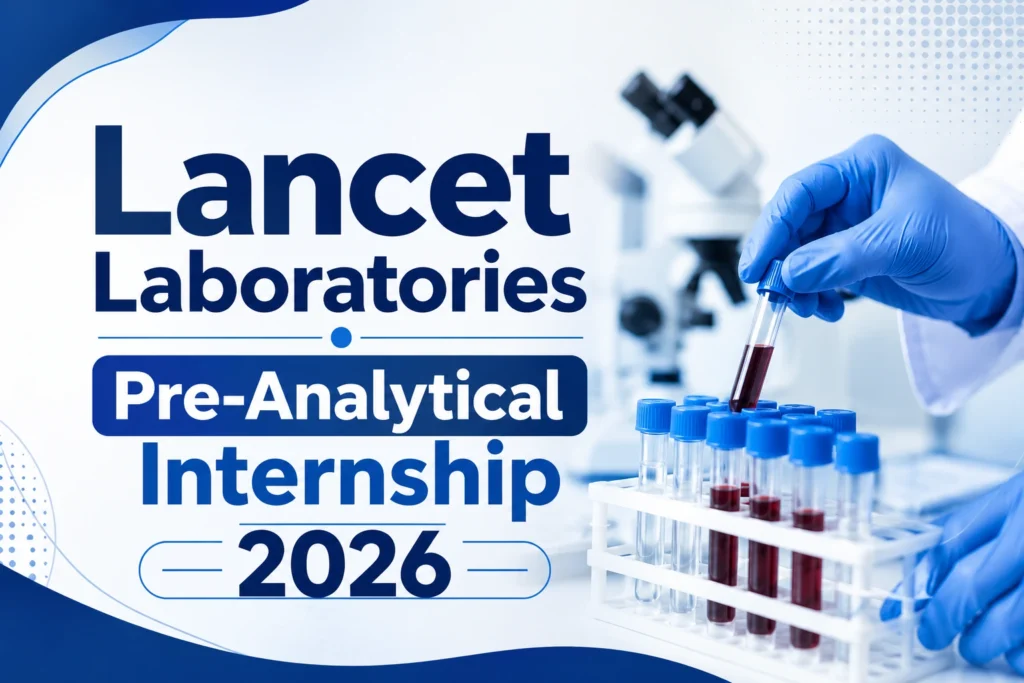
The healthcare system is often judged by what patients see — doctors, nurses, hospitals, and treatment rooms. Yet behind every diagnosis lies a network of laboratory operations that quietly supports modern medicine every day.
The Lancet Laboratories Pre-Analytical Internship 2026 shines a light on that hidden but essential side of healthcare.
For young South Africans searching for workplace experience in a competitive economy, the programme offers more than technical exposure alone. It introduces participants to professionalism, operational discipline, and the realities of working inside a high-pressure healthcare environment.
As South Africa’s healthcare sector continues evolving, internships that combine practical learning with real-world operational experience may become increasingly valuable pathways into long-term careers.