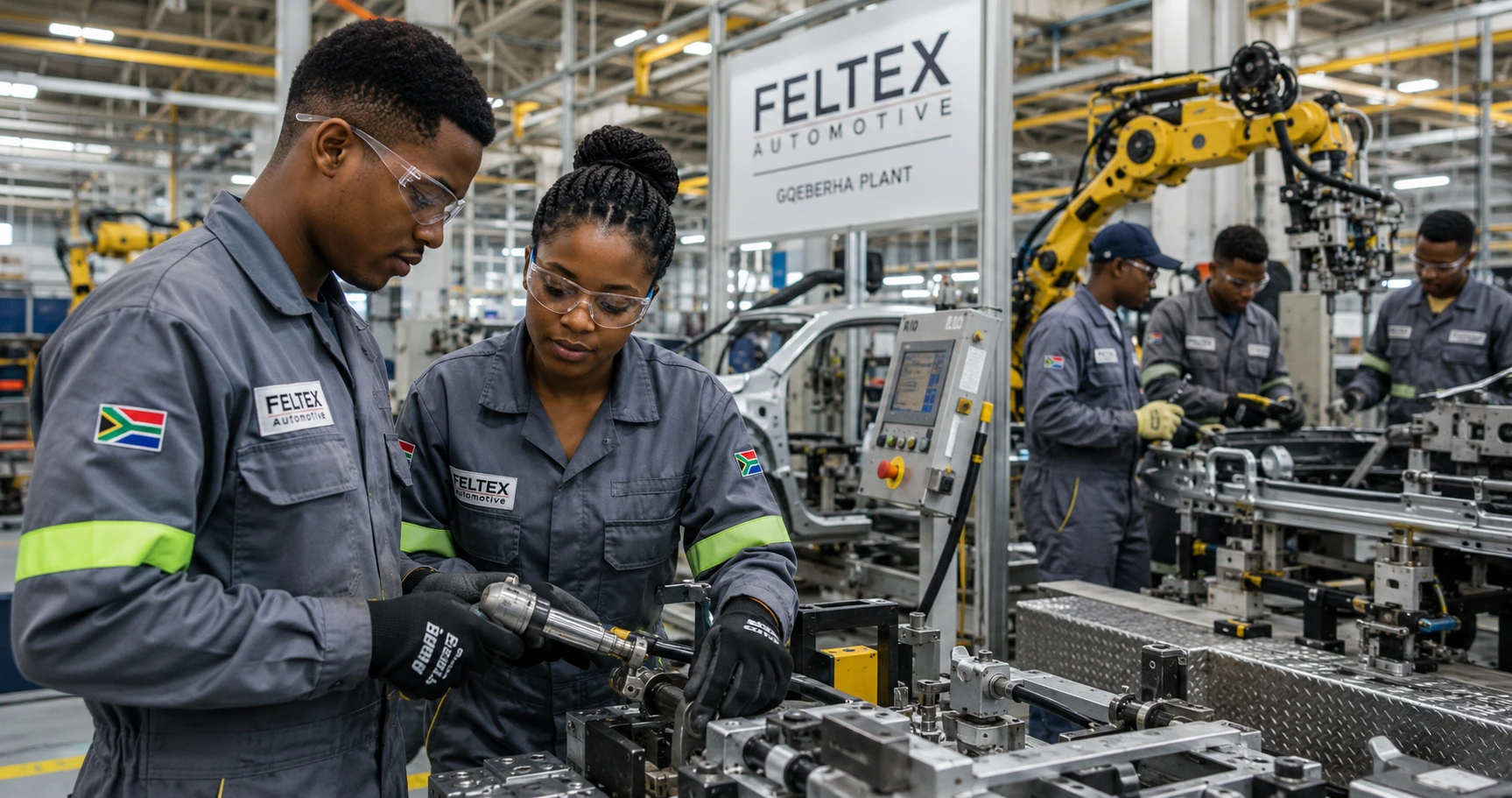
The Feltex Millwright Apprenticeships 2026 offer South African youth a 4-year MERSETA-accredited artisan training opportunity in the automotive manufacturing industry. Here’s why this apprenticeship matters for future technical careers.
South Africa’s manufacturing sector is undergoing significant transformation as industries increasingly depend on technical automation, industrial maintenance systems, and specialised artisan skills. At the same time, the country continues facing a shortage of qualified artisans capable of maintaining advanced production equipment in high-volume industrial environments.
Against this backdrop, the Feltex Millwright Apprenticeships 2026 emerge as an important opportunity for unemployed young South Africans seeking long-term technical careers. The programme offers structured artisan development within the automotive manufacturing sector — one of the country’s more industrially advanced industries.
Unlike many short-term training initiatives, the Feltex apprenticeship provides a four-year development pathway combining technical college training, practical plant exposure, and MERSETA-accredited workplace learning. For aspiring artisans, this type of structured industrial training can become a direct route into one of South Africa’s most consistently employable skilled trades.
As industries continue modernising production systems, the demand for millwrights, fitters, electricians, and maintenance technicians is expected to remain strong over the next decade. The significance of the Feltex Millwright Apprenticeships 2026 therefore extends beyond a single apprenticeship intake — it reflects broader economic shifts shaping the future of technical employment in South Africa.
ALSO APPLY FOR OUTsurance OSS Hastings Learnerships 2026: 7 Important Reasons Young South Africans Should Apply Before Opportunities Fill Up
Quick Facts: Feltex Millwright Apprenticeships 2026
| Item | Details |
|---|---|
| Company | Feltex Automotive |
| Programme | Apprentice Millwright Programme |
| Closing Date | 14 May 2026 |
| Location | Gqeberha |
| Duration | 4 Years |
| Positions Available | Not stated in the official advert |
| Reference Number | Not stated in the official advert |
| Monthly Stipend | Not stated in the official advert |
| Required Gender | Not stated in the official advert |
| Training Authority | MERSETA |
Why the Feltex Millwright Apprenticeships 2026 Matter in Today’s Economy
South Africa’s industrial sector has increasingly highlighted the shortage of qualified technical artisans. Manufacturing facilities now rely on automated machinery, robotics, conveyor systems, electrical controls, and high-speed production equipment that require specialised maintenance expertise.
Millwrights occupy a particularly important role because they combine electrical and mechanical competencies. This hybrid skill set allows them to troubleshoot complex industrial systems across multiple disciplines.
The Feltex Millwright Apprenticeships 2026 directly address this growing skills gap by preparing apprentices for industrial maintenance roles inside a real manufacturing environment.
This matters for several reasons.
First, artisan careers remain among the few professions in South Africa where practical technical competence can lead to stable long-term employment without requiring a university degree.
Second, industrial maintenance roles are difficult to outsource or fully automate because production facilities require on-site technical specialists.
Third, automotive manufacturing remains strategically important to South Africa’s export economy. Companies operating within this sector often maintain higher technical standards because production downtime can result in major financial losses.
For apprentices, exposure to these environments can significantly strengthen future employability.
Understanding the Role of a Millwright in Modern Manufacturing || Feltex Millwright Apprenticeships 2026
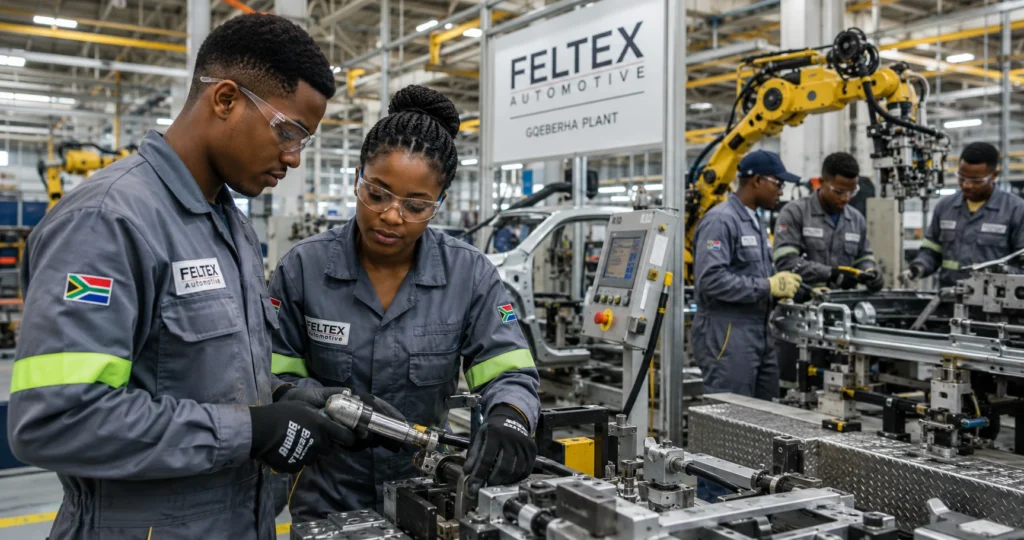
One reason the Feltex Millwright Apprenticeships 2026 stand out is the specialised nature of the millwright profession itself.
A millwright is not simply a mechanic or electrician. Modern millwrights operate across multiple technical disciplines, including: Feltex Millwright Apprenticeships 2026
- Mechanical maintenance
- Electrical systems
- Industrial fault finding
- Automation systems
- Pneumatics and hydraulics
- Conveyor and production equipment maintenance
- Preventative maintenance planning
As factories become increasingly automated, the complexity of industrial equipment continues rising. Manufacturers therefore require technicians capable of understanding both electrical and mechanical systems simultaneously.
This dual competency explains why millwrights remain highly valued across industries such as:
- Automotive manufacturing
- Food processing
- Mining
- Packaging
- Energy production
- Petrochemical operations
- Logistics and warehousing
The Feltex programme appears designed to expose apprentices to precisely these operational realities through practical plant experience and accredited training.
The Importance of MERSETA Accreditation || Feltex Millwright Apprenticeships 2026
A major strength of the Feltex Millwright Apprenticeships 2026 is its alignment with MERSETA.
MERSETA accreditation carries substantial importance within South Africa’s engineering and manufacturing sectors because it ensures training meets recognised national artisan development standards.
This has several implications for apprentices.
Nationally Recognised Training-Feltex Millwright Apprenticeships 2026
Training aligned with MERSETA frameworks is recognised across many industrial sectors, improving career mobility after qualification.
Structured Technical Development-Feltex Millwright Apprenticeships 2026
Accredited programmes follow defined learning pathways rather than informal workplace exposure alone. Apprentices receive systematic training covering theoretical and practical competencies.
Better Industry Credibility-Feltex Millwright Apprenticeships 2026
Employers often prioritise candidates trained through accredited artisan programmes because these qualifications align with national occupational standards.
Improved Long-Term Career Opportunities-Feltex Millwright Apprenticeships 2026
Qualified artisans with accredited training may access broader opportunities both locally and internationally, particularly in industries facing technical skills shortages.
In practical terms, MERSETA alignment increases the long-term value of the apprenticeship beyond immediate workplace experience.
Why Automotive Manufacturing Remains a Strong Career Sector
The automotive sector continues playing a critical role within South Africa’s industrial economy. Manufacturing hubs in provinces such as the Eastern Cape support thousands of direct and indirect jobs linked to vehicle production, components manufacturing, logistics, and maintenance operations.
The Feltex Millwright Apprenticeships 2026 provide exposure within this environment, which is significant because automotive facilities typically operate under highly technical production standards.
These plants rely heavily on:
- Automated assembly systems
- Robotics
- Precision machinery
- Continuous production processes
- Strict quality control systems
As a result, apprentices trained in automotive manufacturing often gain experience with advanced industrial technologies not always available in smaller manufacturing environments.
Another important factor is production reliability. Automotive factories cannot afford prolonged downtime because disruptions affect supply chains and export commitments. Maintenance departments therefore operate strategically rather than reactively.
For apprentices, this creates opportunities to learn modern maintenance philosophies such as:
- Preventative maintenance
- Predictive maintenance
- Root cause analysis
- Equipment reliability systems
- Production optimisation
These skills remain highly transferable across broader industrial sectors.
The Technical and Physical Demands of the Apprenticeship
The programme requirements also reveal the realities of industrial artisan work.
Applicants are expected to demonstrate:
- Physical fitness
- Problem-solving ability
- Hand-eye coordination
- Adaptability
- Willingness to work at heights
- Ability to operate in heavy industrial environments
These expectations reflect the demanding nature of technical maintenance careers.
Unlike office-based occupations, industrial artisans frequently work around:
- Large machinery
- Electrical systems
- Elevated platforms
- Noisy environments
- Rotating equipment
- Production pressures
However, these same conditions often contribute to stronger long-term employability because technical trades require practical resilience and operational discipline.
The willingness to travel and train away from home also indicates the programme’s commitment to comprehensive development rather than minimal workplace exposure.
For many apprentices, adapting to these professional expectations becomes an important part of career growth.
Why Technical Skills Are Becoming More Valuable Than Ever
A major labour market trend shaping programmes like the Feltex Millwright Apprenticeships 2026 is the rising value of technical and vocational skills.
For years, South Africa placed heavy emphasis on university education while technical trades received comparatively less attention. However, employers increasingly report shortages of qualified artisans despite high graduate unemployment levels.
Several economic shifts are driving renewed demand for artisan careers:
Industrial Automation
As production systems become more technologically advanced, companies require skilled technicians to maintain and troubleshoot equipment.
Infrastructure Maintenance Needs
South Africa’s infrastructure challenges continue creating demand for technical maintenance expertise across multiple sectors.
Retirement of Experienced Artisans
Many experienced artisans are approaching retirement age, creating replacement demand within engineering industries.
Global Skilled Labour Shortages
Technical trades remain in demand internationally, particularly in countries facing industrial workforce shortages.
The result is growing recognition that vocational and technical pathways can provide strong long-term career prospects.
Programmes such as the Feltex apprenticeship therefore align with broader shifts in workforce development priorities.
What This Means Going Forward
The growing focus on artisan development suggests several important trends for South Africa’s future labour market.
Skilled Trades Will Remain Essential
Despite advances in automation, industries still require qualified technicians capable of maintaining complex equipment and operational systems.
Technical Training May Become More Competitive
As awareness grows around artisan career stability, high-quality apprenticeship programmes may attract increasing applicant volumes.
Manufacturing Modernisation Will Continue
Industrial facilities are expected to adopt more advanced production technologies, increasing demand for technically versatile artisans such as millwrights.
Vocational Careers Could Gain Greater Social Recognition
The labour market is gradually shifting toward practical competency-based employment models, where technical expertise may become more valuable than traditional academic credentials alone in certain sectors.
The Feltex Millwright Apprenticeships 2026 reflect these wider developments by offering structured entry into a technically specialised profession linked to long-term industrial demand.
Minimum Requirements for the Feltex Millwright Apprenticeships 2026
Applicants must have one of the following:
Option 1:
- Grade 12 with Mathematics and Science
OR Option 2:
- N3 qualification including:
- Electrical/Fitter Trade Theory
- Mathematics
- Engineering Science
The programme is particularly suited for technically minded individuals interested in engineering, industrial systems, and maintenance operations.
Key Responsibilities During the Apprenticeship
Apprentices will be expected to:
- Learn industrial maintenance practices
- Operate and maintain production equipment
- Participate in technical training programmes
- Support maintenance activities within the plant
- Gain exposure to electrical and fitter disciplines
- Develop teamwork and quality compliance skills
These responsibilities indicate that apprentices will receive active operational exposure rather than passive observation.
How to Apply
Applicants can apply through the official Feltex careers platform:
Apply for the Feltex Apprentice Millwright Programme 2026
Because the closing date is officially listed as 14 May 2026, interested applicants should apply as early as possible.
FAQs About the Feltex Millwright Apprenticeships 2026
Do I need previous work experience to apply for the Feltex apprenticeship?
No previous work experience is mentioned in the official advert. Applicants mainly need the required academic qualifications and technical interest.
What qualification will apprentices receive after completing the programme?
The programme includes MERSETA-accredited artisan development and technical training designed to support qualification within the millwright trade pathway.
Conclusion-Feltex Millwright Apprenticeships 2026
The Feltex Millwright Apprenticeships 2026 represent more than a standard apprenticeship opportunity. They reflect the increasing importance of technical skills within South Africa’s evolving industrial economy.
As manufacturing operations become more technologically advanced, the need for skilled artisans capable of maintaining complex systems is expected to grow steadily. The programme’s combination of MERSETA-accredited training, workplace exposure, and automotive manufacturing experience positions it as a potentially valuable entry point into long-term technical careers.
For young South Africans interested in engineering environments, industrial maintenance, and artisan development, this apprenticeship offers structured exposure to one of the country’s most important industrial sectors while building nationally recognised technical competencies.