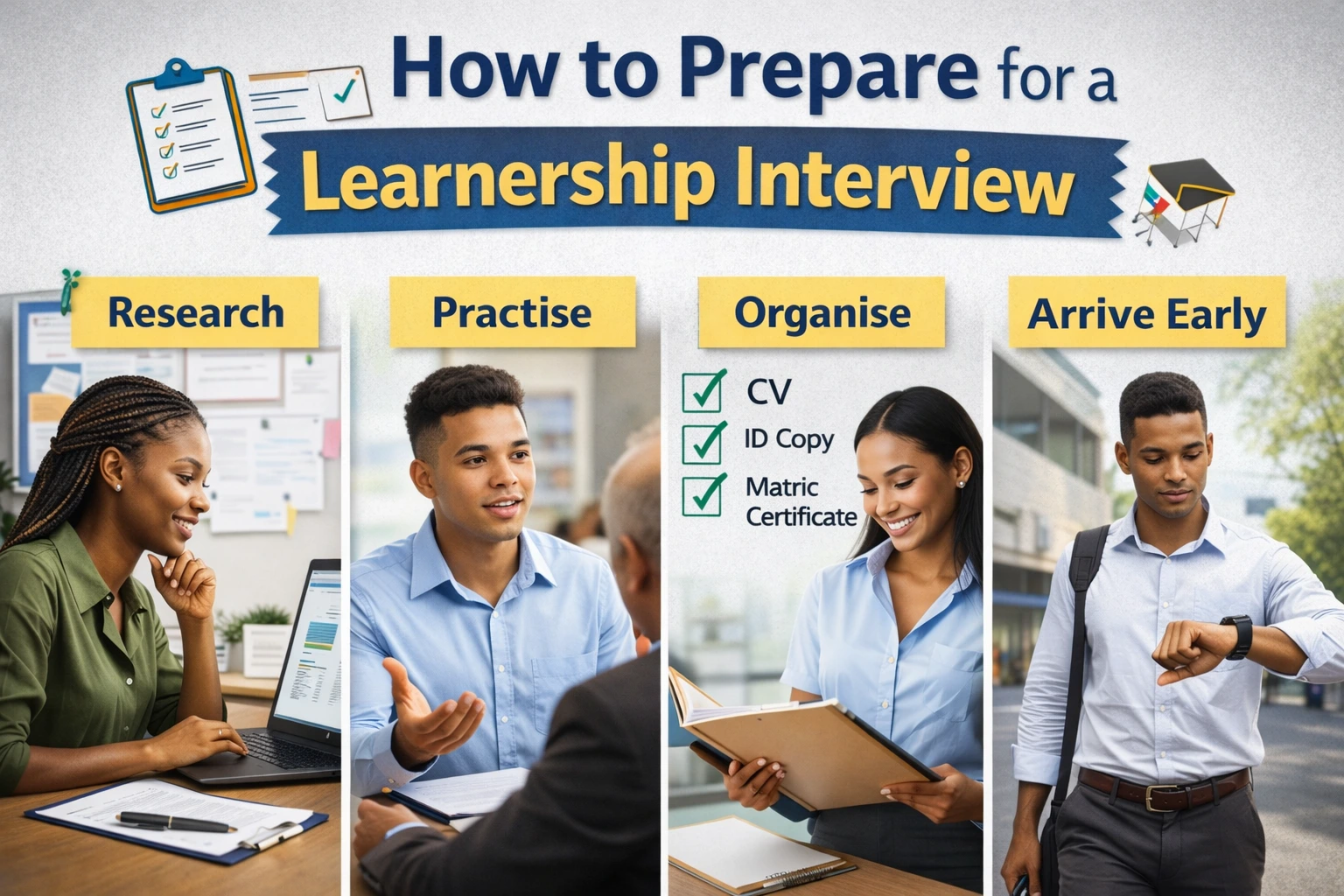
Learn how to prepare for a learnership interview in South Africa with practical tips, common questions, and strategies to improve your chances.
How to Prepare for a Learnership Interview: A Practical Guide for South African Applicants
Understanding how to prepare for a learnership interview can make a major difference to your chances of being selected. In South Africa, learnerships are highly competitive because they combine structured training with workplace experience. Employers often receive hundreds of applications for a small number of positions.
A learnership interview is usually designed to assess more than just academic results. Recruiters want to see whether candidates demonstrate motivation, reliability, communication ability, and a genuine willingness to learn.
Preparation matters. Candidates who research the organisation, practise answering interview questions, and organise their documents tend to perform better than those who attend interviews without preparation.
This guide explains what employers typically look for in learnership candidates, how interviews are structured, and the practical steps you can take to improve your chances.
ALSO READ How Learnerships Work in South Africa (NQF & SETA Explained) 2026
ALSO READ Plan Ahead: Nelson Mandela University 2027 Application Dates – Apply from April 2026!
What a Learnership Interview Actually Is
A learnership interview is a screening process used by employers or training providers to select candidates for structured workplace training programmes.
Unlike traditional job interviews that focus heavily on experience, learnership interviews often focus on potential and attitude.
Recruiters may ask questions that help them evaluate:
- Your willingness to learn
- Your ability to follow instructions
- Your communication skills
- Your understanding of the industry
- Your reliability and work ethic
Many employers also want to confirm that candidates understand the commitment required for the full duration of the learnership.
Because learnerships combine training and work, employers need candidates who will complete the programme successfully.
What You’ll Actually Be Asked in a Learnership Interview
How to Prepare for a Learnership Interview
While questions vary between organisations, learnership interviews usually include a mix of basic background questions and behavioural questions.
Background Questions-How to Prepare for a Learnership Interview
These help interviewers understand your education and goals.
Examples include:
- Tell us about yourself.
- Why did you apply for this learnership?
- What did you study in school or college?
- What are your career goals?
Behavioural Questions-How to Prepare for a Learnership Interview
These explore how you respond to situations.
Examples include:
- Tell us about a time you worked in a team.
- How do you handle pressure or deadlines?
- Describe a challenge you overcame.
- What motivates you to succeed?
Motivation Questions-How to Prepare for a Learnership Interview
Because learnerships involve training, motivation matters.
Examples include:
- Why do you want to work in this industry?
- What skills do you hope to gain from the programme?
Who Qualifies for Most Learnership Interviews
While requirements vary between programmes, most learnerships in South Africa expect candidates to meet certain basic criteria.
Typical Minimum Requirements
✔ South African citizen
✔ Grade 12 or relevant qualification
✔ Basic communication skills
✔ Willingness to complete structured training
These requirements may differ depending on the industry.
If an advert lists additional requirements, those should always take priority.
Why Applicants Often Fail Learnership Interviews
Many candidates lose opportunities because of simple but avoidable mistakes.
Poor preparation
Candidates sometimes arrive without researching the company or understanding the learnership.
Weak communication
Employers expect applicants to explain their motivation clearly.
Lack of confidence
Nervousness is normal, but extremely short answers or silence can make it difficult for interviewers to assess candidates.
Incomplete documents
Missing documents such as ID copies or certificates can delay or invalidate an application.
Arriving late
Punctuality is often interpreted as a sign of professionalism.
✅ Who Should Apply for Learnerships
Learnerships are especially valuable for people who want to gain practical skills while building a career path.
Good candidates often include:
- Recent matriculants exploring career options
- TVET college graduates seeking industry experience
- Young job seekers without formal work experience
- Individuals changing career direction
Applicants who are motivated to learn and willing to commit to the programme tend to succeed.
Competition Level
Competition Level: High
Learnerships in South Africa usually attract large numbers of applicants because they offer structured training and practical experience.
Several factors increase competition:
- Limited positions per programme
- High youth unemployment levels
- Strong demand for workplace experience
This means applicants should prepare carefully and present themselves professionally during interviews.
Tips to Improve Your Chances-How to Prepare for a Learnership Interview
Preparation is the single most effective way to stand out during a learnership interview.
Research the organisation
Learn about the company’s industry and the type of work they do.
Practise common interview questions
Practice answering questions out loud with a friend or family member.
Prepare examples
Think of real-life situations that show teamwork, responsibility, or leadership.
Dress professionally
Even for entry-level programmes, first impressions matter.
Be honest
Interviewers value authenticity more than memorised answers.
Common Mistakes Applicants Make
Avoiding these mistakes can immediately improve your chances.
Memorising scripted answers
Over-rehearsed answers can sound unnatural.
Speaking negatively about previous experiences
Even if you had challenges, keep your answers constructive.
Not asking questions
Interviewers often appreciate candidates who show curiosity.
Poor body language
Avoid looking at the floor or crossing your arms during the interview.
Application Strategy-How to Prepare for a Learnership Interview
If you are invited for a learnership interview, follow this preparation strategy.
Step 1: Understand the programme
Read the learnership advert carefully so you know what the training involves.
Step 2: Prepare your documents
Ensure your documents are organised and easy to present.
Step 3: Practise your answers
Focus on explaining your goals and motivation clearly.
Step 4: Plan your travel
Arrive early to reduce stress and avoid delays.
Step 5: Follow up professionally
After the interview, wait for the employer’s response according to the timeline provided.
Documents Checklist
Specific document requirements may vary between learnership programmes.
Commonly requested documents
These are typical but not stated in the official advert for this guide.
- Updated CV
- Certified ID copy
- Matric certificate
- Academic transcripts (if applicable)
- Proof of residence
Applicants should confirm document requirements directly from the official learnership advert.
Safety & Scam Check-How to Prepare for a Learnership Interview
Unfortunately, some fake learnership offers exist. Protect yourself by following these steps.
- Never pay fees to apply for legitimate learnerships
- Verify the employer’s official website domain
- Confirm the reference number if one is listed
- Be cautious of WhatsApp-only recruitment messages
- Apply through the organisation’s official careers portal
Legitimate learnerships funded by employers or training providers usually do not require application payments.
FAQ: How to Prepare for a Learnership Interview
1. What is a learnership interview?
It is a selection interview used to choose candidates for workplace training programmes.
2. Do I need work experience?
Most learnerships do not require prior work experience.
3. How long do learnership interviews last?
They usually last between 15 and 45 minutes, depending on the employer.
4. What should I wear?
Smart, professional clothing is recommended.
5. Can I bring documents to the interview?
Yes. Bring copies of your CV, ID, and qualifications.
6. Will there be more than one interview?
Some programmes include additional assessments or panel interviews.
7. What happens after the interview?
Employers normally review candidates and contact successful applicants.
8. How long does feedback take?
The timeline varies by organisation and is usually communicated during the recruitment process.
9. What if I do not get selected?
You can apply for other learnerships and continue improving your interview skills.
10. Can I reapply for future programmes?
Yes. Many organisations open learnership applications annually.
Final Assessment
Knowing how to prepare for a learnership interview can significantly improve your chances of success. Employers want candidates who demonstrate motivation, reliability, and a willingness to learn.
Strong preparation, clear communication, and professional behaviour during the interview can help applicants stand out in a competitive selection process.
Even if you are applying for your first opportunity, taking time to research the employer and practise your answers shows commitment — something many recruiters value highly.
Last verified: 11 March 2026