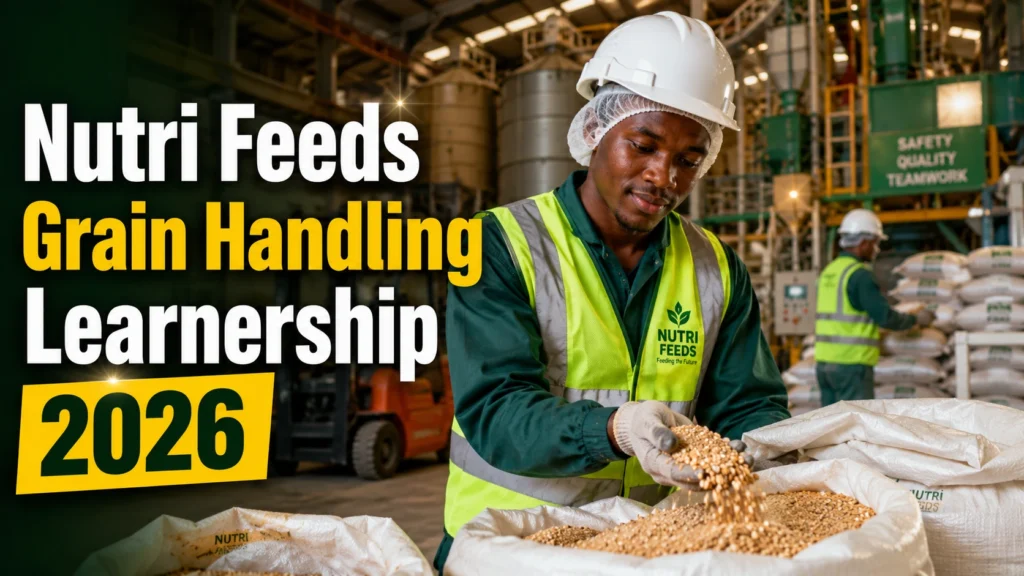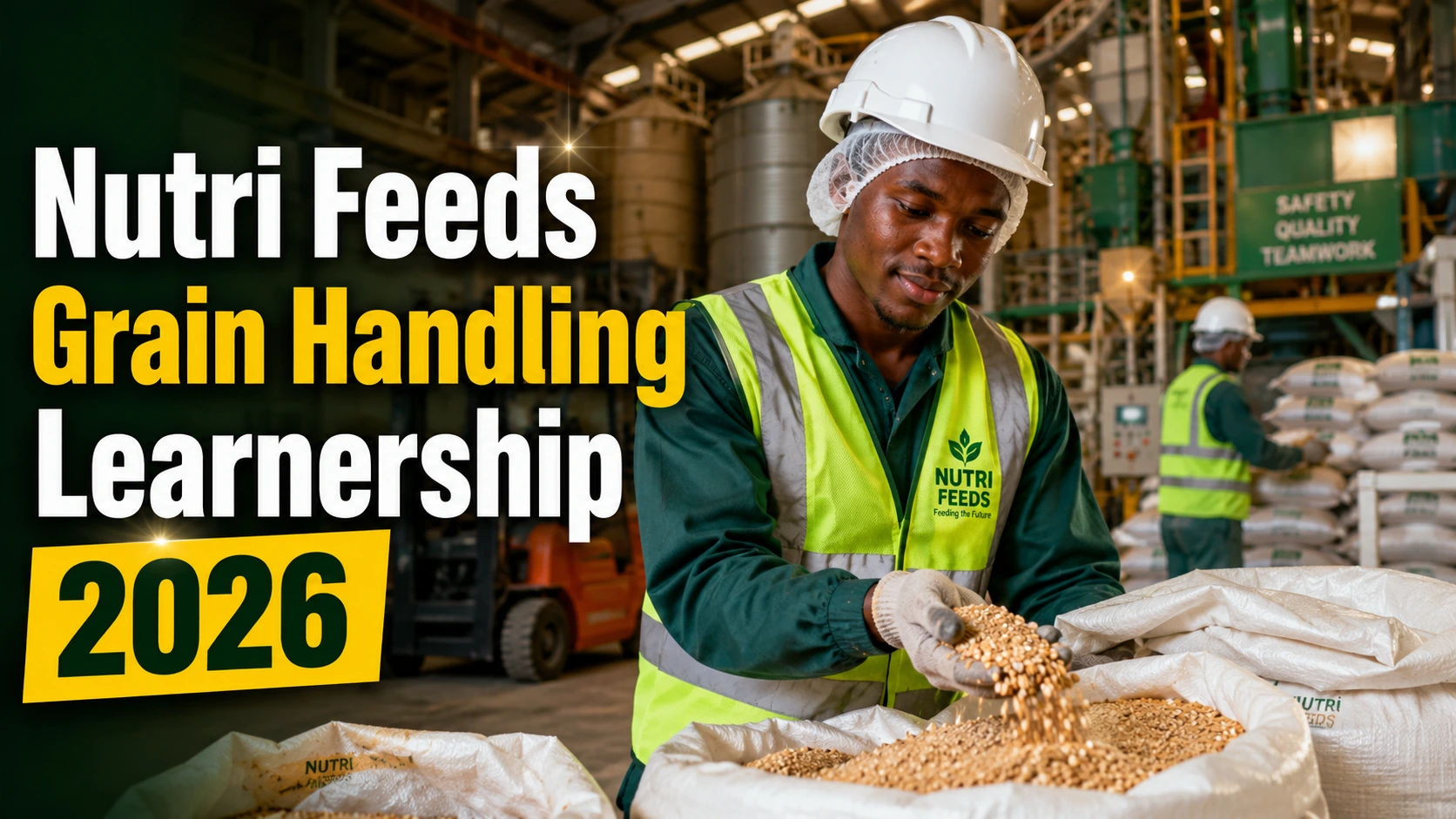
The Nutri Feeds Grain Handling Learnership 2026 offers a 12-month workplace training opportunity in Marble Hall for young South Africans interested in agriculture, production and manufacturing.
Before sunrise breaks over the farming roads surrounding Marble Hall, trucks already begin moving through the area carrying grain, feed supplies and agricultural products that keep South Africa’s farming economy alive.
Inside warehouses and production facilities, workers prepare for another long shift. Machines start humming. Safety checks begin. Grain deliveries are logged and processed with precision because even a small mistake in agricultural manufacturing can affect entire supply chains.
For many young South Africans watching these industries from the outside, the challenge has never been a lack of willingness to work. The problem is access.
Without experience, opportunities remain limited. Without opportunities, gaining experience becomes almost impossible.
That reality is part of what makes the Nutri Feeds Grain Handling Learnership 2026 significant for young people interested in agriculture, logistics, manufacturing and production work. The 12-month programme offers structured workplace learning inside a real production environment where learners can gain practical exposure to grain handling and feed manufacturing operations.
At a time when youth unemployment continues affecting communities across South Africa, particularly in rural and semi-rural regions, opportunities linked to practical industries are becoming increasingly valuable.
The learnership is based in Marble Hall and is open to both employed and unemployed applicants who meet the programme requirements.
Applications close on 29 May 2026.
Quick Facts About the Nutri Feeds Grain Handling Learnership 2026
- Closing date: 29 May 2026
- Location: Marble Hall, South Africa
- Duration: 12 months
- Reference number: LEARN26
Why the Nutri Feeds Grain Handling Learnership 2026 Matters in Today’s Economy
South Africa’s agriculture sector often receives less public attention than industries like mining, finance or technology, yet it remains one of the country’s most important economic foundations.
Agriculture supports food production, transportation networks, warehousing systems and manufacturing supply chains across provinces. Behind supermarket shelves and livestock farming operations sits an enormous operational network that depends on grain processing, storage and feed production.
This is where companies like Nutri Feeds play a role.
The Nutri Feeds Grain Handling Learnership 2026 is more than a training programme focused on one factory environment. It introduces learners to systems that support broader agricultural production in South Africa.
For young applicants entering the labour market, that exposure matters.
Many entry-level job seekers struggle because they lack practical workplace understanding. Learnerships help bridge that gap by combining structured learning with real operational environments where learners experience workplace expectations directly.
In industries like manufacturing and agriculture, practical experience often becomes more valuable than theoretical knowledge alone.
That is why programmes connected to production environments continue attracting strong interest among young South Africans looking for stable career pathways.
A Closer Look at the Grain Handling Environment
For people unfamiliar with agricultural manufacturing, grain handling may sound simple on paper. In reality, it involves coordinated systems that require discipline, safety awareness and operational precision.
Inside grain handling facilities, every stage matters.
Grain must be received, checked, stored properly and moved efficiently through production systems. Feed manufacturing environments also rely heavily on timing, machine coordination and workplace safety procedures.
The Nutri Feeds Grain Handling Learnership 2026 gives learners exposure to these operational systems while helping them understand how production facilities function daily.
Learners may gain practical experience in areas such as:
- Grain receiving and storage
- Feed production processes
- Warehouse support
- Workplace safety systems
- Equipment handling
- Quality control support
- Production assistance
- Communication within manufacturing teams
This kind of exposure can help learners build confidence inside industrial work environments where structure and teamwork are essential.
Life Inside a Manufacturing Workplace
For many young South Africans entering their first workplace opportunity, adjusting to production environments can be both exciting and challenging.
Manufacturing facilities operate differently from classroom settings or casual work environments. Schedules are stricter. Safety rules are non-negotiable. Team coordination becomes critical because production systems depend on consistency.
Learners joining the programme should expect physically active environments where reliability matters daily.
Standing for long periods, following operational procedures and maintaining concentration throughout shifts are normal parts of production-focused industries.
But this environment also teaches lessons many employers value deeply.
Punctuality. Discipline. Communication. Accountability.
These workplace behaviours are often what separate candidates who remain employable long-term from those who struggle to adapt professionally.
The learnership creates a space where learners can begin developing those habits while gaining industry-related exposure.
The Growing Importance of Agricultural Manufacturing Skills
Across South Africa, conversations about youth employment often focus heavily on office jobs or digital careers. While those sectors remain important, industries linked to agriculture and manufacturing continue offering practical entry points for many young people.
Agricultural manufacturing supports thousands of jobs across supply chains, warehouses, transport systems and production facilities.
In provinces with strong farming activity, grain handling and feed production remain essential operational sectors.
Programmes like the Nutri Feeds Grain Handling Learnership 2026 help introduce younger workers to these industries at a time when companies increasingly need workers who understand operational efficiency, safety procedures and production processes.
For learners willing to work in hands-on environments, these industries can provide long-term career opportunities that extend beyond temporary employment.
Expert Insight: Why Learnerships in Production Industries Can Create Long-Term Value
One overlooked reality about South Africa’s labour market is that many industries still depend heavily on operational skills rather than academic qualifications alone.
Production facilities, warehouses and manufacturing operations require workers who understand systems, teamwork and consistency under pressure.
Learnerships linked to these sectors help candidates build what employers often call “workplace readiness.” This includes understanding shift structures, following safety procedures, communicating with supervisors and working within operational timelines.
In industries where downtime can cost companies money, dependable workers become highly valuable.
Even when permanent placement is not guaranteed, practical production experience often strengthens future applications for warehouse, logistics, manufacturing and operational roles.
What Applicants Need Before Applying
The application requirements for the Nutri Feeds Grain Handling Learnership 2026 remain relatively straightforward, but preparation still matters.
Applicants are required to submit:
- Updated CV
- Clear copy of South African ID
- Copies of qualifications
- Grade 12 certificate
- Proof of banking details
A post-matric qualification may improve competitiveness, but the programme remains open to applicants willing to learn and build workplace skills.
One detail many applicants overlook is document presentation.
Recruiters reviewing multiple applications often notice organisation immediately. Documents that are blurry, incomplete or poorly named can create unnecessary frustration during the screening process.
Using clear file names such as “Name_CV” or “Name_ID” may seem minor, but small details can improve professionalism.
Applicants should also ensure phone numbers and email addresses remain active after submission.
Why Marble Hall’s Local Economy Makes This Opportunity Relevant
Marble Hall may not receive the same national attention as Johannesburg, Durban or Cape Town, but towns connected to agriculture often play critical roles in South Africa’s economic ecosystem.
Agricultural hubs support farming communities, food production systems and supply networks that stretch far beyond provincial borders.
In these environments, opportunities linked to manufacturing and grain processing carry added significance because they support local employment while strengthening agricultural operations.
Young people living in smaller towns frequently face fewer employment opportunities compared to major urban centres. Learnerships based in regions like Marble Hall therefore become especially important for local economic participation.
For some learners, this programme may provide their first structured introduction to industrial work.
For others, it may become a stepping stone toward larger operational roles in agriculture, warehousing or logistics.
Possible Career Paths After the Learnership
Although the programme does not guarantee permanent employment, the experience gained may support future opportunities in related industries.
Learners who complete the programme could strengthen their readiness for roles such as:
- Grain Handler
- Production Assistant
- Warehouse Assistant
- Manufacturing Operator
- Feed Production Worker
- Logistics Assistant
- Stock Controller
- General Production Worker
South Africa’s manufacturing and logistics sectors continue relying on operational support staff who understand workplace systems and safety procedures.
Experience inside structured production environments can therefore improve employability over time.
Where To Apply
Applications for the Nutri Feeds Grain Handling Learnership 2026 must be submitted via email.
Application Email: sibulele.ngcanga@cbh.africa
Reference Number: LEARN26
Applicants should include the reference number clearly in the email subject line.
Closing Date: 29 May 2026
Late applications may not be considered.
see also: ABSA Junior Learnerships 2026: Complete Guide for South African Youth
FAQ About the Nutri Feeds Grain Handling Learnership 2026
Who can apply for the Nutri Feeds Grain Handling Learnership 2026?
The programme is open to employed and unemployed South Africans who meet the minimum requirements, including a Grade 12 certificate.
Where is the learnership based?
The programme takes place in Marble Hall, South Africa.
Does the programme guarantee permanent employment?
No permanent placement guarantee is stated in the advert, but the workplace experience may strengthen future job opportunities.
Final Thoughts on the Nutri Feeds Grain Handling Learnership 2026
In South Africa’s difficult employment environment, many young people are not only searching for jobs — they are searching for a starting point.
The Nutri Feeds Grain Handling Learnership 2026 offers something practical: exposure to a real production environment where learners can build workplace discipline, operational understanding and industry-related skills.
That matters more than many people realise.
In sectors like agriculture and manufacturing, experience often becomes the bridge between unemployment and opportunity. Even a single year inside a structured workplace can help learners develop habits and confidence that improve long-term employability.
For applicants interested in production work, warehouse operations or agricultural industries, this programme represents more than short-term training.
It represents access to an industry that continues playing a major role in South Africa’s economy — often quietly, but consistently.
And for many young South Africans trying to enter the workforce for the first time, access is where everything begins.