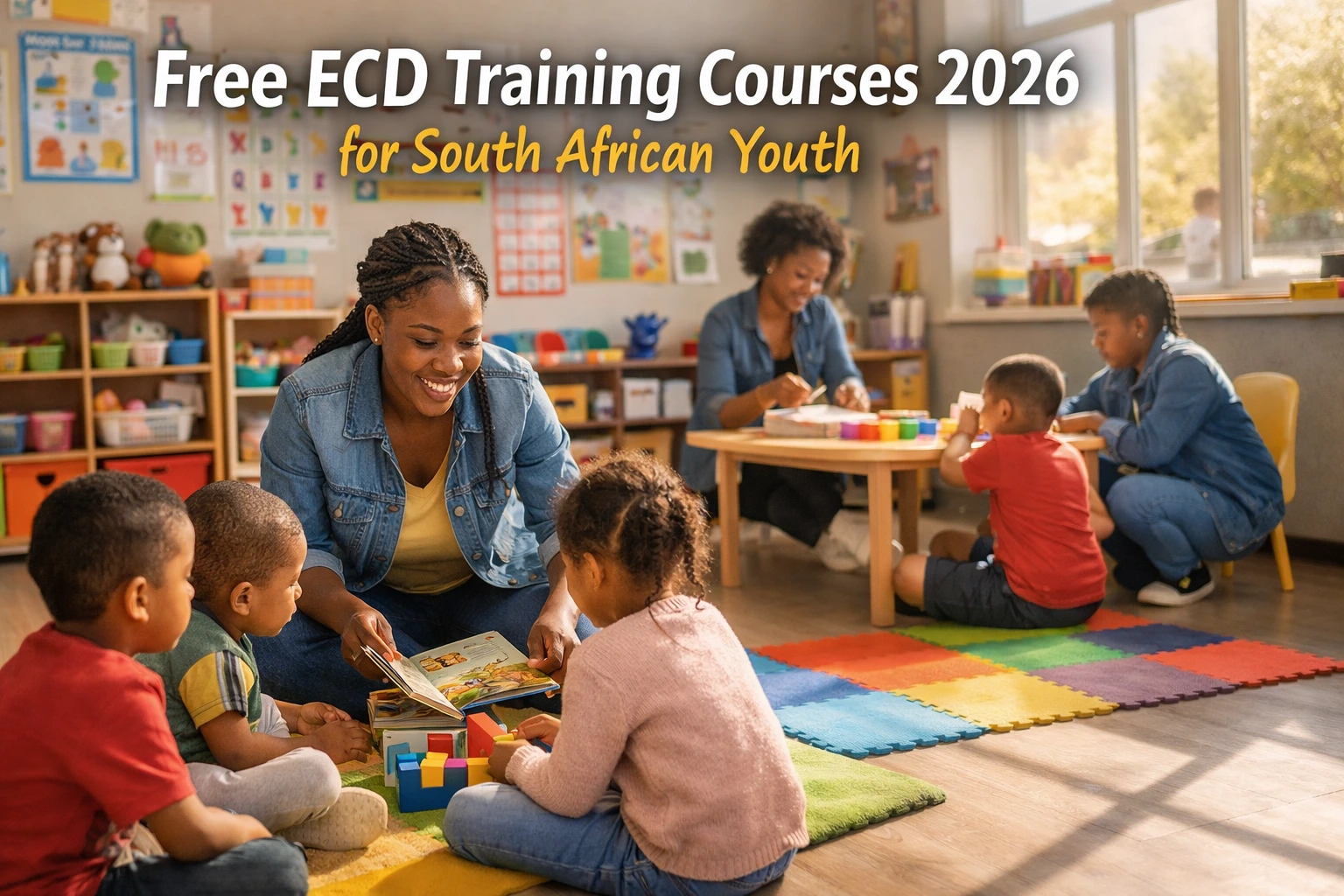
Free ECD Training Courses 2026 offer youth funded pathways into childcare careers. Learn requirements, application steps, competition level and safety tips.
Free Early Childhood Development (ECD) training opportunities are opening across South Africa in 2026, offering young people a chance to gain recognised skills for working with young children. These programmes are designed for individuals interested in education, childcare, and community development roles.
Many training initiatives are supported or aligned with institutions such as the Department of Higher Education and Training and qualification standards like the South African National Qualifications Framework. This helps ensure that learners who complete training receive credentials recognised by employers and education providers nationwide.
For unemployed youth or school leavers, these programmes can provide structured learning, practical exposure, and a potential entry point into education-related careers. However, applicants should carefully verify each opportunity’s official requirements and application process before submitting their details.
What Free ECD Training Courses 2026 programme is (plain English explanation)
ECD training courses focus on preparing individuals to support the development and education of children from birth to around six years old. This stage is widely recognised as crucial for building foundational cognitive, emotional, and social skills.
Training is usually delivered through:
- Short certificates
- Diplomas
- Learnership programmes combining theory and workplace practice
Most funded options aim to reduce financial barriers by covering tuition costs. However, funding structures may differ between providers, so applicants must confirm whether all learning expenses are covered.
Some programmes may be offered through private education institutions such as Varsity College or through community-based training centres.
What you’ll actually do (real-world examples)
While adverts often describe training outcomes in broad terms, the daily reality of ECD training can include:
- Assisting teachers in preschool classrooms
- Supervising play-based learning activities
- Helping prepare teaching materials such as flashcards or storybooks
- Supporting meal routines, hygiene practices, and safety procedures
- Observing children’s development and reporting progress
- Communicating with parents about learning milestones
In workplace placements, learners may spend time at crèches, early learning centres, or community childcare programmes. This exposure helps translate theory into practical teaching skills.
Who qualifies (minimum requirements checklist)
Requirements vary depending on the specific provider, but many ECD training programmes typically expect applicants to:
- Be South African citizens or permanent residents
- Be between approximately 18 and 35 years old (in most cases)
- Hold a Grade 11 or Grade 12 certificate
- Demonstrate willingness to complete the full programme duration
- Show genuine interest in working with young children
Because eligibility rules differ across programmes, candidates should always confirm criteria directly on the official advert.
Why applicants get disqualified
ECD opportunities are often competitive, and disqualification can happen for practical reasons such as:
- Submitting incomplete applications or missing documents
- Applying without meeting minimum academic requirements
- Providing incorrect contact details
- Failing assessments or interviews
- Not demonstrating interest or experience in childcare environments
In some cases, applicants underestimate the physical and emotional demands of working with young children, which may affect selection outcomes.
✅ Who should apply (expert analysis)
These training courses are best suited to:
- Youth considering careers in teaching or childcare
- Individuals interested in community development or social services
- School leavers seeking practical qualifications rather than university degrees
- Applicants who enjoy structured routines and working with children
They may be less suitable for candidates looking for office-based roles or fast-track employment opportunities, as ECD training requires patience, consistency, and emotional resilience.
Competition level ✅
Competition level: High
ECD training programmes often attract large numbers of applicants because they are funded and accessible to youth with varied academic backgrounds. The growing national focus on early childhood education also increases interest.
Limited placement opportunities at training centres or preschools can further raise competition levels.
✅ Tips to improve selection chances
Applicants can strengthen their profiles by:
- Volunteering at local preschools or community centres before applying
- Completing short online childcare or first-aid courses
- Preparing a simple motivation explaining why they want to work in ECD
- Ensuring academic certificates and ID copies are clear and certified
- Checking emails regularly after applying
Demonstrating commitment to early childhood education can make a meaningful difference during selection.
✅ Common mistakes applicants make
- Applying to multiple programmes using incorrect or outdated information
- Ignoring instructions about document uploads
- Assuming all funded programmes include stipends
- Using unofficial application links from social media
- Waiting until the last minute to apply
Being organised and verification-focused helps avoid unnecessary setbacks.
✅ Application strategy (step-by-step)
Because application processes vary, a careful strategy is essential:
- Identify the official training provider or institution.
- Search for the programme title or reference number on the provider’s careers or admissions page.
- Create or update your online profile if required.
- Complete the application form accurately.
- Upload supporting documents.
- Review the application before submitting.
- Monitor communication channels for interview or assessment updates.
Applicants should avoid sharing personal information via unofficial channels such as unverified WhatsApp groups.
Documents checklist
The advert does not specify a full list of required documents. However, typical ECD training applications may request:
- Certified copy of ID
- Academic certificates or school results
- Proof of residence
- Updated CV
Quick Facts
- Closing date: Not stated in the official advert
- Location: Not stated in the official advert
- Duration: Typically 6–12 months (varies by provider)
- Positions available: Not stated in the official advert
- Reference number: Not stated in the official advert
- Stipend: Not stated in the official advert
If key details are missing, applicants should verify directly on official provider websites or through verified education institutions before applying.
SEE ALSO: Yes 4 Youth Learnership- P&G Jozi Park (X6) at DHL Supply Chain (South Africa) (Pty) Ltd
Safety & Scam Check
When applying for funded training programmes:
- Never pay application or placement fees for legitimate learnerships or internships
- Verify the employer or institution’s official website domain
- Confirm programme reference numbers where available
- Be cautious of WhatsApp-only application instructions
- Apply through recognised careers portals whenever possible
Scam listings often create urgency or promise guaranteed placements — both are warning signs
Where to apply
APPLY HERE: Free ECD Training Courses 2026
ALSO APPLY FOR: Synergy Transformation Solutions SETA-Accredited Learnership 2026 offers funded training opportunities for unemployed youth
FAQ about Free ECD Training Courses 2026
Are these courses completely free?
Many are funded, but applicants should verify whether tuition, materials, or transport costs are covered.
Will I receive a stipend?
Not stated in the official advert. Some programmes offer stipends, others do not.
How long do ECD courses take?
Typically between six and twelve months depending on the qualification level.
Do I need teaching experience to apply?
Usually not, but volunteer experience can strengthen your application.
Can I apply without matric?
Some programmes accept Grade 11, but requirements vary.
Are qualifications recognised nationally?
Programmes aligned with national frameworks are generally recognised by employers.
Where will practical training take place?
Often at preschools, crèches, or community learning centres.
How will I know if I am shortlisted?
Providers typically communicate via email or phone.
Can older applicants apply?
Age limits differ between programmes.
Do these courses guarantee employment?
No training programme can guarantee a job, but qualifications may improve employability.
Final assessment
Free ECD Training Courses 2026 present meaningful pathways for youth interested in education and community development careers. With growing national demand for qualified practitioners, gaining early childhood qualifications can open doors to both formal employment and community-based roles.
However, applicants should approach these opportunities realistically. Competition is strong, funding details differ, and successful completion requires dedication. Taking time to verify official information, prepare documents carefully, and demonstrate genuine interest in childcare can significantly improve outcomes. Free ECD Training Courses 2026.
For motivated candidates willing to commit to structured training and hands-on learning environments, ECD programmes can provide a valuable starting point in South Africa’s evolving education sector.