Unilever Automated Packaging Learnership 2026: 6 Critical Reasons Unemployed Youth Should Apply Before April 3

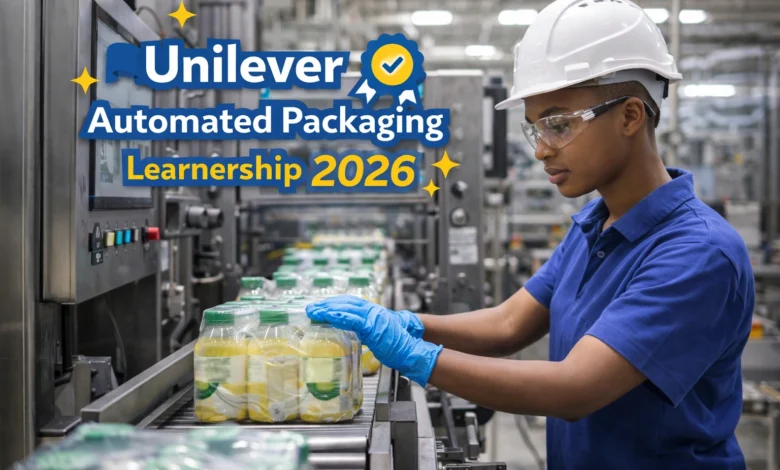
Explore the Unilever Automated Packaging Learnership 2026 in Boksburg—requirements, skills, insights, and why this opportunity is a game-changer for unemployed youth in South Africa.
Unilever Automated Packaging Learnership 2026: A Strategic Opportunity for Unemployed Youth in South Africa
As South Africa continues to grapple with high youth unemployment in 2026, structured workplace training programmes are becoming more critical than ever. The Unilever Automated Packaging Learnership stands out as a practical, skills-focused opportunity designed specifically for unemployed learners seeking entry into the manufacturing and supply chain sector.
Offered by Unilever, this learnership is not just about gaining experience—it is about building a foundation for long-term employability in an evolving industrial economy. Located in Boksburg at the Anderbolt Factory, the programme targets individuals with basic qualifications and equips them with hands-on technical, operational, and safety skills.
With the application deadline fast approaching, this opportunity is both urgent and highly relevant for job seekers aiming to transition from unemployment into structured career pathways.
ALSO APPLY FOR Junior Business Administrator Learnership at Bosch 2026: 7 Key Insights Every Applicant Must Know Now
ALSO READ OUR PRIVACY POLICY
📌 Quick Facts Box About Unilever Automated Packaging Learnership 2026
- Closing Date: April 3, 2026
- Location: Boksburg, South Africa
- Duration: Not stated in the official advert
- Positions Available: Not stated in the official advert
- Reference Number: R-1178373
- Stipend: Not stated in the official advert
- Required Gender: Not stated in the official advert
- Company Name: Unilever
Understanding the Unilever Automated Packaging Learnership 2026
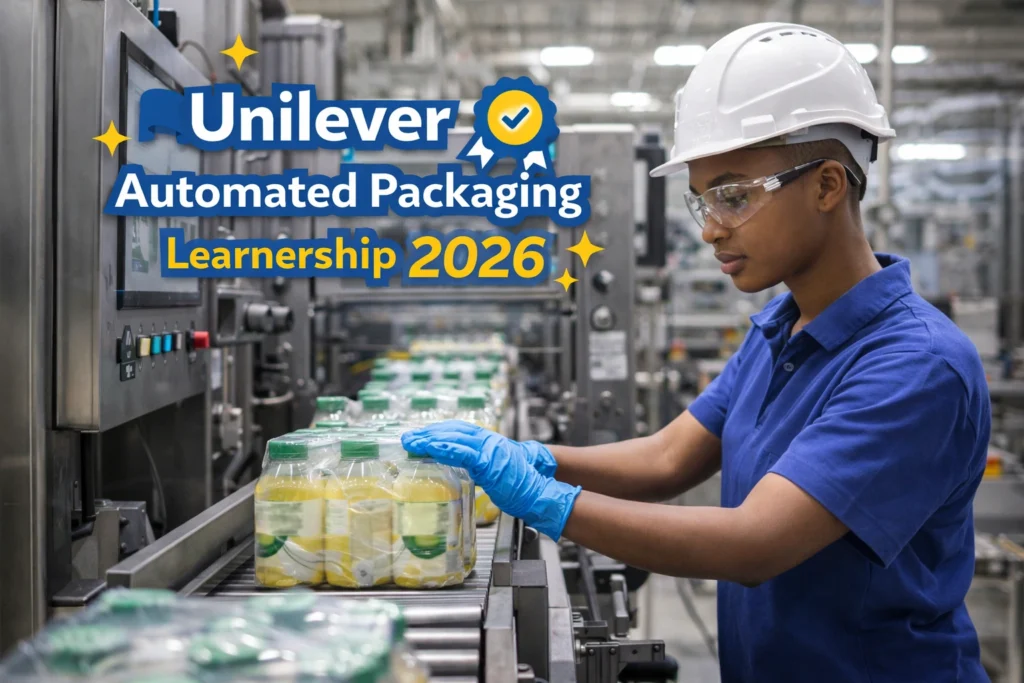
The Unilever Automated Packaging Learnership is structured around real-world production line operations. Unlike purely academic programmes, this initiative places learners directly into a working factory environment where they interact with automated machinery and production systems.
Participants are trained to:
- Operate automated packaging equipment
- Monitor product quality and packaging standards
- Perform routine cleaning and maintenance tasks
- Ensure compliance with health and safety regulations
This approach reflects a broader shift in workforce development. Employers increasingly prioritize candidates who can demonstrate practical competence rather than just theoretical knowledge.
By embedding learners within the Anderbolt Factory operations, Unilever ensures exposure to real production challenges, preparing them for immediate integration into the workforce.
ALSO READ 10 Costly Mistakes Students Must Avoid in 2026 to Succeed Academically and Financially
Why This Unilever Automated Packaging Learnership 2026 Matters in Today’s Economic Climate
South Africa’s labour market is undergoing structural changes. While traditional entry-level jobs are declining, opportunities in manufacturing, logistics, and technical operations are expanding—particularly for individuals with hands-on skills.
The Unilever Automated Packaging Learnership directly addresses this gap by:
- Providing technical training aligned with industry needs
- Offering exposure to automated manufacturing systems
- Developing employability skills such as teamwork and communication
Globally, manufacturing is becoming more automated, but this does not eliminate jobs—it transforms them. Workers are now required to understand machine operations, detect faults, and maintain quality standards.
This learnership equips participants with exactly those capabilities, positioning them for roles in:
- FMCG production
- Packaging and logistics
- Industrial operations
For unemployed youth, this represents a shift from job seeking to skill building—a critical transition in today’s economy.
Skills Development: Building a Future-Ready Workforce
One of the defining strengths of the Unilever Automated Packaging Learnership is its focus on multi-layered skills development.
Technical Skills: Unilever Automated Packaging Learnership 2026
Learners gain direct experience with:
- Automated packaging machinery
- Pre-start-up equipment checks
- Fault detection and corrective actions
These skills are highly transferable across industries that rely on automated systems.
Operational Discipline: Unilever Automated Packaging Learnership 2026
The programme emphasizes strict adherence to:
- Standard Operating Procedures (SOPs)
- Safety regulations
- Quality control standards
This instills a professional mindset essential for industrial environments.
Soft Skills and Behavioural Competencies: Unilever Automated Packaging Learnership 2026
Beyond technical ability, learners are expected to demonstrate:
- Resilience and personal accountability
- Strong prioritization and time management
- Problem-solving and proactive thinking
These competencies are increasingly valued by employers, particularly in fast-paced production environments.
Entry Requirements: Accessibility Meets Industry Standards
The Unilever Automated Packaging Learnership is designed to be accessible while still maintaining a baseline standard of competency.
Minimum Requirements: Unilever Automated Packaging Learnership 2026
- National Senior Certificate (Matric) with Mathematics and Science
OR - N2/N3/N4 Engineering qualification
This dual-entry pathway is significant. It opens the door for both general matriculants and those with technical education backgrounds.
Importantly, the inclusion of Mathematics and Science highlights the technical nature of the programme. Even at entry level, manufacturing roles require basic analytical and numerical skills.
This balance between accessibility and technical readiness ensures that learners can both enter the programme and succeed within it.
Operational Insights: What Learners Will Actually Experience
A closer look at the responsibilities reveals that the Unilever Automated Packaging Learnership is not a passive training programme—it is an active operational role.
Learners will:
- Conduct pre-start checks to ensure equipment readiness
- Monitor production lines for quality deviations
- Respond to process abnormalities in real time
- Clean and maintain machinery according to strict standards
This level of responsibility is intentional. It accelerates learning by placing individuals in situations where they must think critically and act quickly.
For example, identifying a packaging defect early can prevent large-scale product waste—a key concern in FMCG manufacturing.
By participating in these processes, learners develop both technical competence and decision-making confidence.
Sustainability and Modern Manufacturing Practices
An often-overlooked aspect of the Unilever Automated Packaging Learnership is its emphasis on sustainability.
Learners are encouraged to contribute to:
- Eco-efficient production processes
- Waste reduction initiatives
- Responsible resource usage
This aligns with global trends where companies like Unilever are investing in sustainable manufacturing.
Understanding sustainability is no longer optional—it is a core component of modern industrial operations. Employees who can integrate efficiency with environmental responsibility are increasingly valuable.
What This Means Going Forward-Unilever Automated Packaging Learnership 2026
The long-term implications of programmes like the Unilever Automated Packaging Learnership extend beyond individual participants.
For learners, the benefits include:
- Improved employability in technical and industrial roles
- Practical experience that differentiates them in the job market
- Exposure to global manufacturing standards
For the broader economy, such initiatives contribute to:
- Skills development aligned with industry needs
- Reduced youth unemployment
- Strengthened manufacturing capacity
As automation continues to reshape industries, the demand for technically skilled workers will only increase. Learnerships that combine training with real-world application will become essential pathways into employment.
For unemployed youth, the message is clear: opportunities that build practical skills are far more valuable than those offering only theoretical learning.
How to Apply for Unilever Automated Packaging Learnership 2026
Apply for Unilever Automated Packaging Learnership 2026
Frequently Asked Questions (FAQs)-Unilever Automated Packaging Learnership 2026
1. Who is eligible for the Unilever Automated Packaging Learnership?
Anyone with a Matric certificate (including Mathematics and Science) or an N2/N3/N4 Engineering qualification can apply.
2. Does the learnership guarantee a permanent job?
No, permanent employment is not guaranteed, but the experience significantly improves your chances of securing a job in manufacturing or related industries.
Conclusion- Unilever Automated Packaging Learnership 2026
The Unilever Automated Packaging Learnership 2026 represents a meaningful opportunity for unemployed individuals to gain entry into South Africa’s evolving industrial sector. By combining technical training, operational experience, and professional development, the programme offers a practical pathway toward long-term employment.
With the application deadline set for April 3, 2026, time is limited. For those who meet the requirements, this is a chance to transition from unemployment into a structured, skill-building environment within a globally recognized company.
In a labour market where skills increasingly define success, opportunities like this are not just valuable—they are essential.