Learn how to find legitimate learnerships online in South Africa safely, avoid scams, and identify trusted employers offering real skills programmes.
How to Find Legitimate Learnerships Online (Without Falling for Scams)
Searching for learnerships online can be confusing, especially with so many posts circulating on social media and job boards. Many opportunities are genuine, but some listings are outdated, misleading, or even fraudulent.
If you are wondering how to find legitimate learnerships online, the most important step is learning how to verify opportunities before applying.
Learnerships in South Africa are structured training programmes that combine practical work experience with formal learning, often leading to a nationally recognised qualification. They are commonly offered by companies, training providers, and organisations working with Sector Education and Training Authorities (SETAs).
Because learnerships are popular among job seekers, competition is high and misinformation spreads quickly. Understanding where to search and how to verify an advert can help you avoid scams and focus on real opportunities.
This guide explains practical ways to identify trustworthy learnership programmes and apply safely.
CHECK OUR PRIVACY POLICY
ALSO APPLY FOR DHL YES 4 Youth Learnerships 2026 – Boksburg Opportunities for Youth
What Learnership Programmes Actually Are
A learnership is a structured work-based learning programme designed to help participants gain both theoretical knowledge and practical workplace experience.
Typically, learnerships include:
- Classroom or training sessions
- On-the-job work experience
- Skills assessments
- A recognised qualification at completion
Learnerships are usually targeted at young people entering the workforce for the first time, although some programmes accept employed candidates.
In South Africa, many learnerships are linked to skills development initiatives aimed at reducing youth unemployment and improving workplace readiness.
Because these programmes involve training and structured workplace learning, they usually follow clear recruitment processes through official channels.
What You’ll Actually Do in a Learnership
How to Find Legitimate Learnerships Online
The exact activities depend on the industry and qualification, but most learnerships combine learning with real work responsibilities.
Participants might:
- Attend training sessions or workshops
- Complete workplace assignments
- Work alongside experienced staff
- Learn industry-specific systems or tools
- Participate in assessments linked to a qualification
For example, a retail learnership might involve assisting customers, processing payments, and learning stock management systems.
A technical learnership might involve working with machinery, performing maintenance tasks, or assisting engineers.
The key point is that learnerships are designed to build practical skills while learning on the job.
Who Qualifies for Most Learnerships
How to Find Legitimate Learnerships Online
Eligibility requirements vary depending on the programme, but many learnerships share similar entry criteria.
Typical minimum requirements may include:
✔ South African citizenship
✔ Grade 12 qualification or equivalent
✔ Age requirements for youth-focused programmes
✔ Willingness to participate in training and workplace activities
✔ Ability to commit to the full programme duration
Some learnerships require specific subjects such as Mathematics or Physical Science, especially in technical fields.
Because requirements differ between employers and industries, applicants should always review each advert carefully.
Why Many Applicants Get Disqualified
Many job seekers assume they were rejected due to lack of qualifications, but the real reason is often something else.
Here are common reasons applications fail.
Applying through unofficial links-How to Find Legitimate Learnerships Online
Some applicants submit personal information through unverified websites or social media posts instead of official portals.
Missing documentation-How to Find Legitimate Learnerships Online
Learnership applications often require documents such as identification or school certificates. Missing files can prevent an application from being processed.
Ignoring eligibility requirements-How to Find Legitimate Learnerships Online
Applying for programmes that clearly require specific subjects or qualifications can result in automatic rejection.
Poorly prepared CVs-How to Find Legitimate Learnerships Online
Even entry-level programmes require a clear CV explaining education and any relevant experience.
Late applications-How to Find Legitimate Learnerships Online
Some candidates discover opportunities only after deadlines have passed.
Who Should Apply for Learnerships
Learnerships are particularly suitable for people who:
- Recently completed Grade 12
- Want practical work experience while studying
- Prefer learning through hands-on work
- Want to enter industries such as retail, finance, logistics, or engineering
They can also help individuals who want to transition into a new career field without immediately enrolling in full-time academic study.
If you are unsure which career path to follow, a learnership can provide exposure to real workplaces before committing to further education.
Competition Level: High
Competition for learnership programmes in South Africa is typically high.
There are several reasons for this.
First, learnerships often offer both training and work experience, which makes them attractive to young job seekers.
Second, many programmes provide structured development opportunities that can lead to employment.
Third, thousands of candidates often apply for a limited number of placements.
Because of this competition, applicants who submit clear, organised, and verified applications tend to perform better.
Tips to Improve Your Selection Chances
If you want to increase your chances of being selected for a learnership, consider these practical steps.
Apply early
Opportunities can receive large numbers of applications quickly. Submitting your application early reduces the risk of missing deadlines.
Use official sources
Check company career pages and reputable job platforms rather than relying solely on social media posts.
Tailor your CV
Even if you have limited experience, explain your education, interests, and skills clearly.
Prepare your documents in advance
Keep digital copies of:
- Your CV
- ID document
- School certificates
This makes it easier to apply quickly when opportunities appear.
Follow instructions carefully
Employers often use application instructions to assess attention to detail.
Common Mistakes When Searching for Learnerships
Many job seekers unintentionally make mistakes that slow down their search.
Relying only on social media
While social platforms can highlight opportunities, they are not always reliable sources.
Ignoring official career portals
Many legitimate programmes are posted directly on company websites.
Applying without reading the full advert
Some candidates apply without checking eligibility requirements.
Not verifying the employer
Always confirm that the opportunity is linked to a legitimate organisation.
Application Strategy (Step-by-Step)

A structured approach can make the process easier.
Step 1: Identify trusted sources
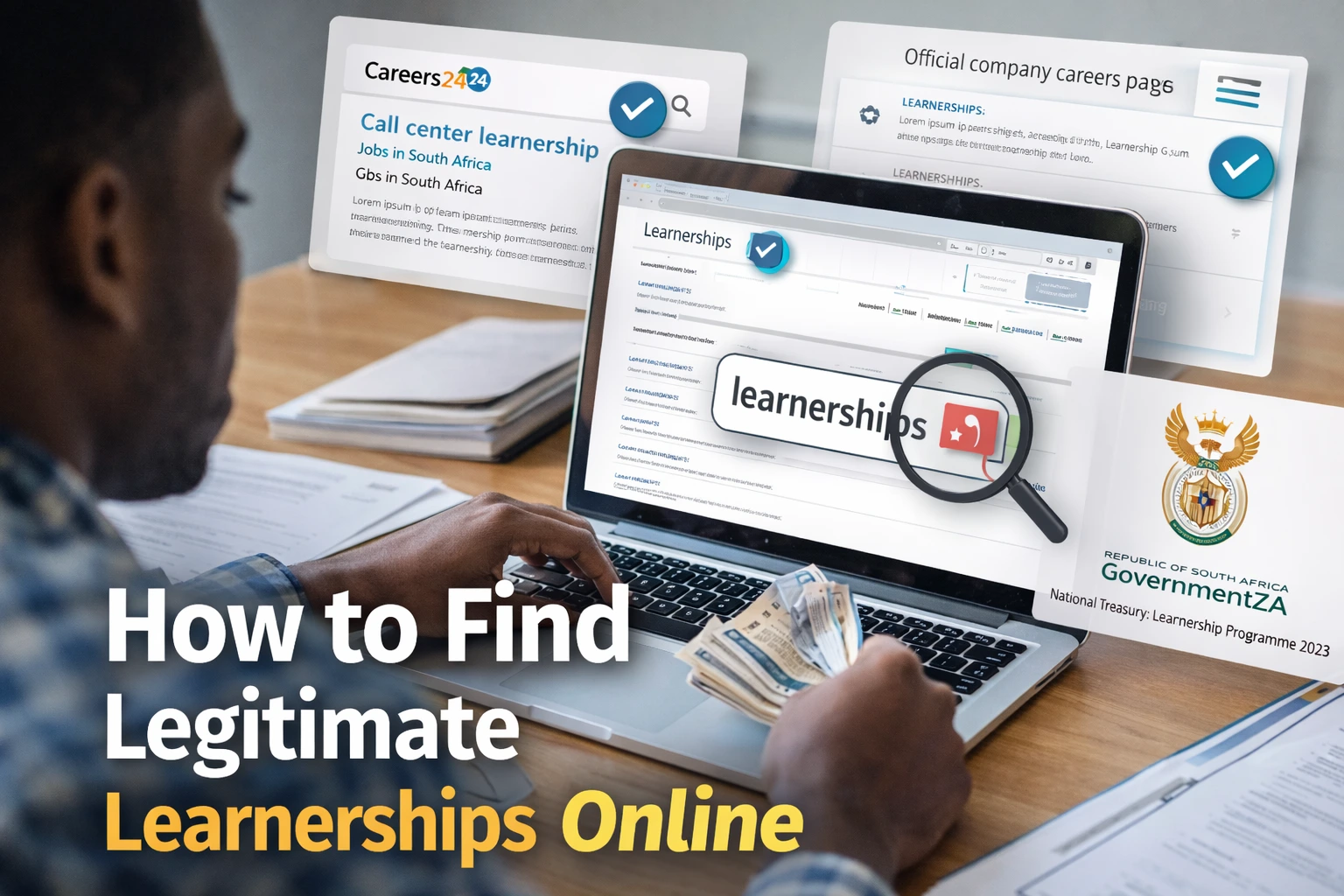
Look for learnerships on official employer websites, government job portals, and reputable career platforms.
Step 2: Verify the advert
Confirm that the opportunity appears on the employer’s official website or trusted recruitment channels.
Step 3: Prepare your documents
Ensure your CV and supporting documents are ready before applying.
Step 4: Submit your application through official channels
Avoid sending personal information through unofficial messaging platforms.
Step 5: Track your applications
Keep a record of where and when you applied so you can follow up if necessary.
Documents Checklist
The required documents depend on the programme, but commonly requested items include:
Typical learnership application documents
- Updated CV
- Certified copy of ID
- Matric certificate or academic transcript
Because specific document requirements are not stated in the official advert, applicants should verify the exact requirements on the official application page before applying.
Safety & Scam Check
Unfortunately, scams targeting job seekers are common.
Follow these safety tips when applying for learnerships.
- Never pay application or recruitment fees for learnership opportunities.
- Verify the employer’s official website domain before submitting personal information.
- Confirm reference numbers or programme titles where possible.
- Be cautious of WhatsApp-only applications claiming guaranteed placement.
- Apply through official career portals whenever possible.
If something feels suspicious, pause and verify the information through official sources.
Frequently Asked Questions
1. What is a learnership?
A learnership is a structured programme combining workplace training with formal learning.
2. Are learnerships paid?
Some programmes offer stipends, but this depends on the employer and programme structure.
3. Who can apply for learnerships?
Many programmes target unemployed youth with a Grade 12 qualification.
4. Where can I find learnership opportunities?
They are often advertised on company career pages, job portals, and official recruitment platforms.
5. How long do learnerships usually last?
Programme lengths vary depending on the qualification and industry.
6. Do learnerships guarantee employment?
Completion of a learnership does not guarantee a job, but it can improve employability.
7. What industries offer learnerships?
Retail, banking, logistics, engineering, hospitality, and information technology often offer learnership programmes.
8. Can employed people apply for learnerships?
Some programmes accept employed candidates, but many are designed for unemployed youth.
9. Are online learnership adverts always reliable?
No. Always verify the source before applying.
10. What should I do if I suspect a scam?
Avoid sharing personal information and report suspicious adverts to the relevant platform
Final Assessment
Learning how to find legitimate learnerships online is an essential skill for job seekers in South Africa.
While many genuine opportunities exist, the growing number of online job listings means applicants must be careful about verifying information before applying.
By focusing on trusted sources, preparing documents in advance, and following a structured application process, candidates can improve their chances of securing legitimate training opportunities.
Ultimately, the key is to approach every opportunity with a verification-first mindset—ensuring that the programme, employer, and application process are all legitimate.
Last verified: 16 March 2026