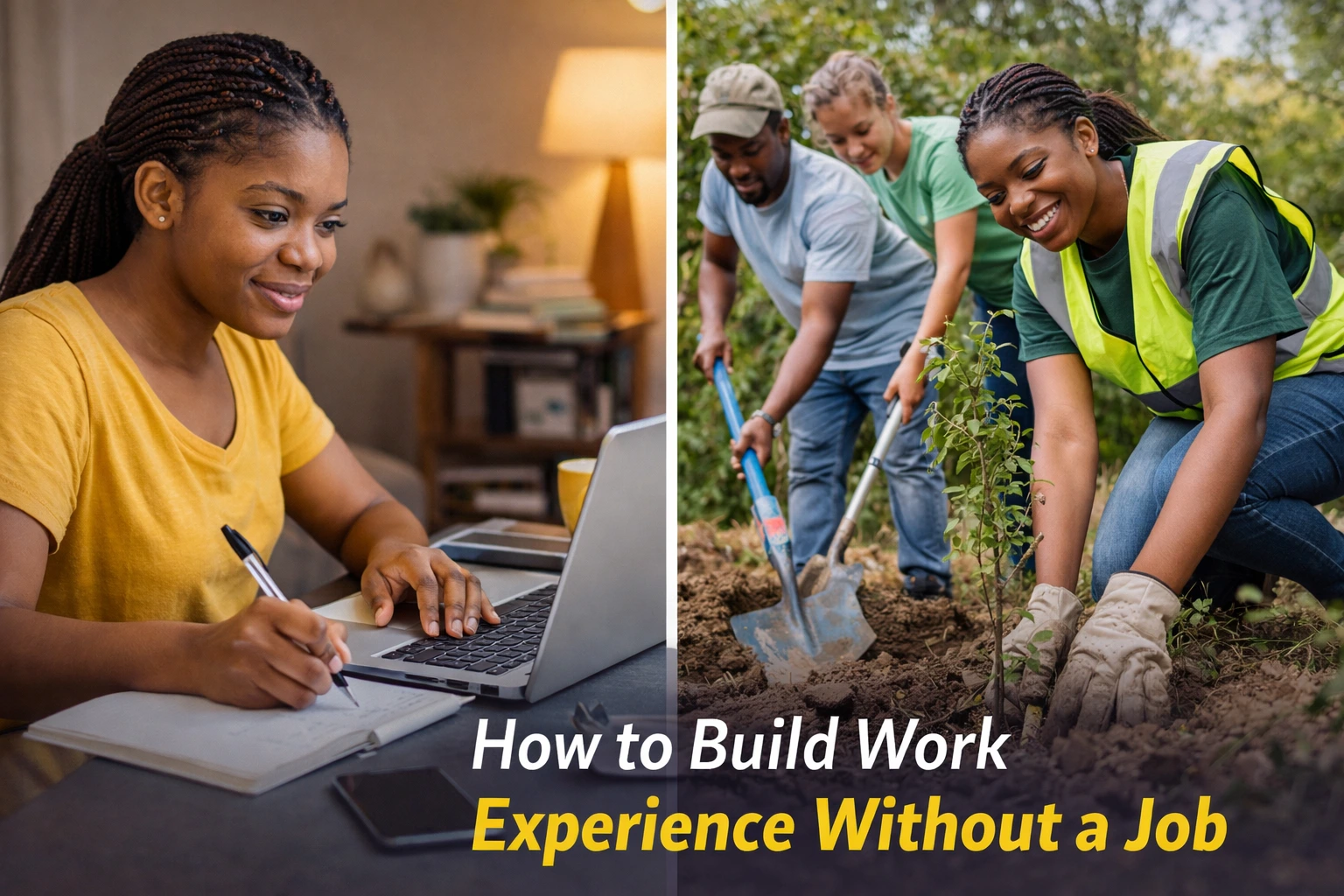
Learn how to build work experience without a job in 2026. Discover practical strategies to gain skills, improve your CV, and stand out to employers.
How to Build Work Experience Without a Job
Introduction: Why Building Work Experience Without a Job Matters Now
In 2026, one of the biggest paradoxes facing job seekers is simple but frustrating: you need experience to get a job, but you need a job to gain experience. This cycle has become more pronounced as employers increasingly prioritise practical skills, adaptability, and real-world exposure over formal qualifications alone.
Understanding how to build work experience without a job has therefore become a critical strategy, not just for graduates but also for career switchers and those re-entering the workforce. In South Africa and beyond, economic pressures and competitive hiring practices mean that candidates must take a more proactive role in shaping their employability.
The shift toward skills-based hiring, digital portfolios, and demonstrable competence is changing how experience is defined. It is no longer limited to formal employment. Instead, it includes a broader range of activities—from volunteering to freelance work and self-initiated projects.
This transformation presents both a challenge and an opportunity. While traditional entry points may be harder to access, alternative pathways to gaining experience are more accessible than ever.
ALSO APPLY FOR PSG Graduate Internship Programme 2027: A Career Launchpad for South African Graduates
ALSO READ OUR PRIVACY POLICY
Redefining Work Experience in a Skills-Based Economy
To understand how to build work experience without a job, it is important to first redefine what “experience” actually means in today’s labour market.
Historically, experience was tied directly to employment. If you had not worked in a formal role, you were considered inexperienced. That definition is rapidly changing. Employers now evaluate candidates based on what they can do, not just where they have worked.
This shift is driven by several factors:
- The rise of remote and gig work
- Increased access to online learning platforms
- The need for adaptable, multi-skilled employees
- Rapid technological change across industries
As a result, experience is increasingly measured through:
- Demonstrated skills
- Completed projects
- Problem-solving ability
- Evidence of initiative
For example, a candidate who has managed a community project or built a personal website may be viewed as more capable than someone with unrelated job experience.
This broader definition creates new opportunities for individuals to build credible, relevant experience outside traditional employment structures.
1. Volunteering: A Strategic Entry Point
One of the most effective ways to build work experience without a job is through volunteering. While often overlooked, volunteering provides structured environments where individuals can develop practical skills and gain real responsibilities.
Volunteering opportunities exist across sectors, including:
- Non-profit organisations
- Community initiatives
- Schools and local projects
- Environmental programmes
What makes volunteering valuable is not just participation, but contribution. Candidates who take on active roles—such as organising events, managing communications, or handling logistics—gain transferable skills that are highly relevant to employers.
For instance, managing a small community project can demonstrate leadership, planning, and teamwork. These are competencies that employers actively seek, particularly in entry-level candidates.
Importantly, volunteering also signals initiative. It shows that an individual is willing to invest time in personal development, even without immediate financial reward.
2. Freelancing and Gig Work: Building a Portfolio
Freelancing has emerged as a powerful method for those learning how to build work experience without a job. With the growth of digital platforms, individuals can offer services in areas such as writing, graphic design, data entry, and social media management.
Unlike traditional employment, freelancing allows individuals to:
- Work on real client projects
- Build a portfolio of completed work
- Gain feedback and improve skills
- Earn income while gaining experience
Even small projects can have significant value. A single completed assignment can demonstrate reliability, technical ability, and client communication skills.
Over time, freelancers can compile a portfolio that serves as tangible proof of their capabilities. This is particularly important in fields where visual or practical output matters, such as design, marketing, or IT.
Freelancing also reflects broader labour market trends, where flexible work arrangements are becoming more common.
3. Personal Projects: Turning Initiative Into Evidence
Another key strategy in understanding how to build work experience without a job is the use of personal projects. These are self-initiated activities that demonstrate skills and creativity.
Examples include:
- Creating a blog or website
- Developing a mobile app
- Running a social media page
- Conducting independent research
Personal projects are particularly valuable because they show initiative and problem-solving ability. They allow individuals to apply theoretical knowledge in practical ways, bridging the gap between learning and doing.
For example, a candidate interested in marketing might create a social media campaign for a local business or a personal brand. This provides measurable outcomes—such as engagement or growth—that can be presented to employers.
In many cases, personal projects can be just as impactful as formal work experience, especially when they are well-documented and aligned with career goals.
4. Learnerships and Internships: Structured Work Exposure
Learnerships and internships remain among the most recognised ways to gain experience without traditional employment. These programmes combine training with practical exposure, making them highly valuable for entry-level candidates.
In South Africa, learnerships are particularly important due to their alignment with industry needs and their role in addressing skills shortages.
They offer:
- Accredited training
- Workplace experience
- Exposure to industry standards
- Opportunities for permanent employment
Internships, while sometimes unpaid or short-term, also provide structured environments for learning. They allow individuals to understand workplace dynamics, build professional networks, and develop industry-specific skills.
From an employer’s perspective, candidates who have completed learnerships or internships are often seen as more job-ready.
ALSO APPLY FOR NEDLAC Internships 2026: Complete Guide for South African Graduates
5. Networking and Informal Opportunities
A less obvious but equally important aspect of how to build work experience without a job is networking. Many opportunities are not formally advertised but arise through personal connections and informal arrangements.
Networking can lead to:
- Shadowing opportunities
- Short-term projects
- Mentorship relationships
- Referrals to potential employers
In practical terms, this means engaging with professionals, attending events, and maintaining an active presence on platforms like LinkedIn.
For example, reaching out to a professional in your field and offering to assist with small tasks can lead to valuable experience.
Networking is not just about finding opportunities—it is about creating them. It allows individuals to position themselves within professional communities, increasing their visibility and credibility.
6. Online Learning With Practical Application
While online courses alone do not constitute experience, they can play a crucial role when combined with practical application.
Many platforms offer courses in:
- Digital marketing
- Coding and IT
- Business management
- Data analysis
The key is to apply what is learned. Completing a course and then using those skills in a project or freelance task transforms theoretical knowledge into practical experience.
Employers increasingly value candidates who can demonstrate both learning and application. This combination signals adaptability and a commitment to continuous development.
What This Means Going Forward
The growing importance of understanding how to build work experience without a job reflects a broader shift in the global labour market. Traditional career pathways are becoming less linear, and individuals are expected to take greater ownership of their professional development.
Looking ahead, several trends are likely to shape this space:
1. Experience Will Become More Portfolio-Based
Employers will rely more on evidence of skills—such as projects and portfolios—rather than job titles alone.
2. Alternative Work Models Will Expand
Freelancing, gig work, and remote opportunities will continue to grow, offering new ways to gain experience.
3. Continuous Learning Will Be Essential
The pace of change in industries will require individuals to constantly update and apply their skills.
4. Initiative Will Be a Key Differentiator
Candidates who actively seek opportunities and create their own experience will stand out in competitive job markets.
Ultimately, the concept of experience is being redefined. It is no longer something that can only be given by an employer—it is something that can be built, demonstrated, and owned by the individual.
Quick Facts Box
- Closing date: Not stated in the official advert
- Location: Not stated in the official advert
- Duration: Not stated in the official advert
- Positions available: Not stated in the official advert
- Reference number: Not stated in the official advert
- Stipend: Not stated in the official advert
FAQs Of How to Build Work Experience Without a Job
1. Can I get a job without any formal work experience?
Yes. Many employers accept alternative experience such as volunteering, freelancing, and personal projects.
2. What is the fastest way to gain experience?
Freelancing and volunteering are often the quickest ways to start building practical skills.
3. Do online courses count as work experience?
Not on their own, but they become valuable when combined with real-world application.
4. How do I prove experience without a job?
You can use portfolios, references, project results, and documented achievements.
5. Is volunteering really useful for my career?
Yes. It helps develop skills, build networks, and demonstrate initiative to employers.
Conclusion Of How to Build Work Experience Without a Job
Understanding how to build work experience without a job is no longer optional in today’s competitive job market—it is a necessary strategy for anyone serious about career growth. As traditional employment pathways become more limited and experience-driven hiring continues to rise, individuals must take a more proactive and creative approach to developing their skills.
What emerges clearly is that experience is no longer defined by a payslip or job title. It is shaped by initiative, consistency, and the ability to apply knowledge in real-world contexts. Whether through volunteering, freelancing, personal projects, or structured programmes like learnerships, job seekers now have multiple avenues to demonstrate their value to employers.
The key advantage lies in ownership. Those who actively create opportunities for themselves—rather than waiting for formal employment—are better positioned to compete in a skills-based economy. They build not only competence, but also confidence and adaptability, qualities that are increasingly difficult to teach but highly valued in the workplace.
Ultimately, the ability to build work experience without a job reflects a broader shift in how careers are formed. It places control back into the hands of the individual. For those willing to act, experiment, and persist, the path to meaningful employment is no longer blocked—it is simply being redefined.
Last Verified: 20 March 2026