
Discover the AMPATH Phlebotomy Learnership 2027 programme. Learn about requirements, training locations, closing date, and how to apply for this funded healthcare opportunity.
AMPATH Phlebotomy Learnership 2027: A pathway into pathology careers for South African youth
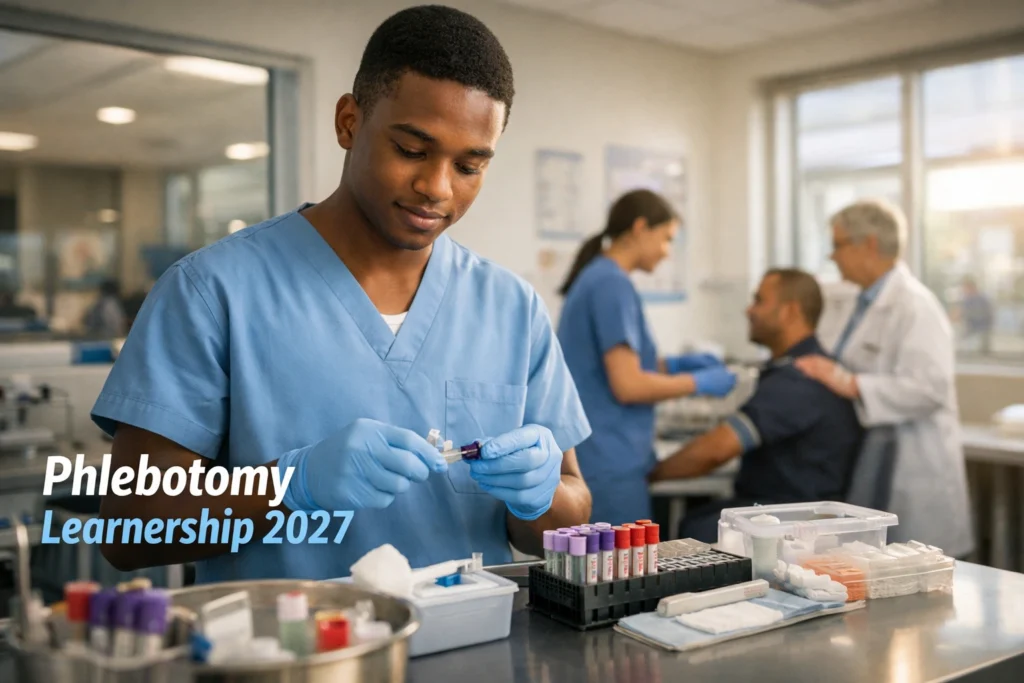
On a bright weekday morning in a busy healthcare centre, a young trainee adjusts their gloves carefully before greeting the next patient. The waiting room hums with quiet urgency. Nurses move with practiced confidence. Laboratory couriers arrive and leave. For many South African youth, moments like these represent more than routine medical care — they symbolise a gateway into meaningful healthcare careers.
The AMPATH Phlebotomy Learnership 2027 offers exactly that gateway. Designed as a fully accredited, workplace-based training programme, it combines theoretical learning with real clinical exposure. In a country where unemployment remains a pressing challenge, structured learnerships in critical sectors like healthcare are becoming increasingly important 💡
This HWSETA-funded opportunity provides aspiring healthcare professionals with practical skills in blood collection, laboratory support, and patient interaction — all while building a foundation for professional registration.
Building a future in healthcare through the AMPATH Phlebotomy Learnership 2027
The AMPATH Phlebotomy Learnership 2027 is more than a training course. It is a structured career development pathway supported by the Health and Welfare Sector Education and Training Authority (HWSETA) and delivered through clinical training environments operated by Ampath Laboratories.
Participants will gain hands-on experience in specimen collection and laboratory processes — skills that are essential to modern diagnostic medicine. From routine blood tests to supporting disease monitoring programmes, phlebotomy technicians play a vital but often overlooked role in healthcare systems.
Training will take place at designated centres in Centurion and Durban, giving learners exposure to real patient workflows and multidisciplinary teams. The programme runs full-time from January 2027 to December 2029, with structured assessments and panel interviews forming part of the selection process.
Importantly, the learnership is funded — a critical factor in expanding access to healthcare education for young South Africans who may not otherwise afford tertiary training 🎓
Quick Facts 📊
- Closing date: 30 April 2026
- Location: Training centres in Centurion (Gauteng) and Durban (KZN), South Africa
- Duration: 24 months full-time training
- Positions available: Limited
Why phlebotomy matters in modern pathology
Pathology services sit at the centre of evidence-based medicine. Accurate diagnoses often depend on reliable laboratory data — and that process begins with correct specimen collection.
Phlebotomy technicians ensure samples are taken safely, labelled accurately, transported correctly, and processed efficiently. In busy healthcare environments, these seemingly simple responsibilities can directly influence treatment outcomes.
The AMPATH Phlebotomy Learnership 2027 introduces trainees to patient-centred care principles alongside technical competencies. Learners must understand infection control, ethical conduct, and communication skills.
In South Africa’s evolving healthcare landscape, this role is becoming increasingly relevant as both public and private health systems expand diagnostic services. Preventive health campaigns, chronic disease monitoring, and occupational health screening all rely on laboratory testing — creating sustained demand for skilled technicians.
Training structure: balancing classroom learning and real-world exposure
One of the programme’s strongest features is its blended learning format. Participants attend online classes while simultaneously completing in-person practical training from Monday to Friday.
This approach reflects global trends in vocational education, where competency-based learning is emphasised over purely theoretical instruction. Learners experience the pace and expectations of real healthcare environments early in their training.
Key components of the programme include:
- Blood specimen collection techniques
- Laboratory safety and infection prevention
- Patient communication and professionalism
- Sample handling and quality assurance
- Exposure to multidisciplinary clinical teams
The learnership requires full-time commitment, meaning participants cannot hold alternative employment during the training period. While this may be challenging financially for some candidates, it ensures learners remain focused on developing high-level clinical competencies.
Eligibility criteria and youth empowerment goals
The AMPATH Phlebotomy Learnership 2027 aligns with youth empowerment initiatives aimed at building workforce capacity in essential sectors. Applicants must be under the age of 35 and possess strong academic performance — specifically at least 60% in Pure Mathematics, Life Sciences or Biology, and English at matric level.
Another important requirement is that candidates must not hold qualifications above NQF Level 4, ensuring the programme prioritises entry-level opportunities for school leavers and early-career job seekers.
In addition, learners must have access to a smartphone or digital device with stable internet connectivity for online coursework — reflecting the increasing digitisation of healthcare education 📱
Limited programme capacity means selection is competitive. Candidates undergo structured assessments and panel interviews before final acceptance.
Expert Insight: The long-term workforce impact
From a workforce development perspective, learnerships like the AMPATH Phlebotomy Learnership 2027 help address two simultaneous challenges — youth unemployment and healthcare skills shortages.
South Africa’s diagnostic sector continues to grow as disease surveillance improves and preventative healthcare expands. This creates ongoing demand for technically trained professionals who can operate within regulated clinical environments.
Successful completion of the programme enables graduates to pursue registration with the Health Professions Council of South Africa (Health Professions Council of South Africa), formalising their professional status.
This transition from trainee to registered technician can significantly improve employability and earning potential. Over time, such programmes contribute to strengthening national health infrastructure and improving patient care outcomes.
Local relevance: opportunities beyond major metros
While healthcare career pathways are often associated with large urban hospitals, pathology services operate across diverse geographic areas — including smaller towns and industrial zones.
By training technicians in both Gauteng and KwaZulu-Natal, the programme reflects regional workforce needs. Graduates may later find opportunities in private laboratories, mobile diagnostic units, occupational health services, and public sector facilities.
For many learners, relocation for training can also be a formative life experience. Exposure to new professional networks and structured work environments often builds confidence and independence.
In communities facing high youth unemployment, stories of successful learnership graduates can inspire others to pursue skills-based careers rather than remaining stuck in cycles of short-term informal work.
Challenges learners should consider
Despite its benefits, the AMPATH Phlebotomy Learnership 2027 requires careful consideration. The programme’s intensity and full-time schedule demand resilience and discipline.
Travel costs, accommodation arrangements, and balancing personal responsibilities can all influence a learner’s experience. Prospective applicants should realistically assess their readiness for a structured clinical environment.
At the same time, the long-term advantages — including recognised professional registration and practical work experience — often outweigh these short-term challenges.
ALSO APPLY FOR: Unilever SHE Internship 2026: Safety & Environment Opportunity at Anderbolt
Where to apply ✉️
Interested candidates can direct queries and application-related communication via email to:
APPLY HERE: AMPATH Phlebotomy Learnership 2027
Applicants are encouraged to prepare supporting academic records and ensure they meet all eligibility criteria before submitting their application.
Frequently Asked Questions
1. When does the AMPATH Phlebotomy Learnership 2027 start?
The programme is expected to begin in late January 2027 and run for approximately 24 months of full-time training.
2. Will completing the programme guarantee employment?
While employment is not guaranteed, successful graduates gain recognised clinical experience and may qualify for professional registration, which improves job prospects.
3. Can candidates with tertiary qualifications apply?
No. Applicants must not hold qualifications above NQF Level 4 to qualify for HWSETA funding eligibility.
Conclusion: A step toward meaningful healthcare careers
The AMPATH Phlebotomy Learnership 2027 represents more than a training opportunity. It reflects a broader shift toward practical, skills-focused career development in South Africa’s healthcare sector.
By combining structured learning with real patient interaction, the programme prepares young people for professional responsibilities that directly impact community wellbeing. In a labour market where formal job opportunities can be scarce, pathways like this offer hope — not just for individual advancement, but for strengthening the country’s diagnostic capacity.
For motivated candidates willing to commit to rigorous training, the learnership could mark the beginning of a rewarding journey into pathology and patient care. Ultimately, programmes like this illustrate how targeted investment in youth skills development can shape healthier futures — both for individuals and for society as a whole 🌍