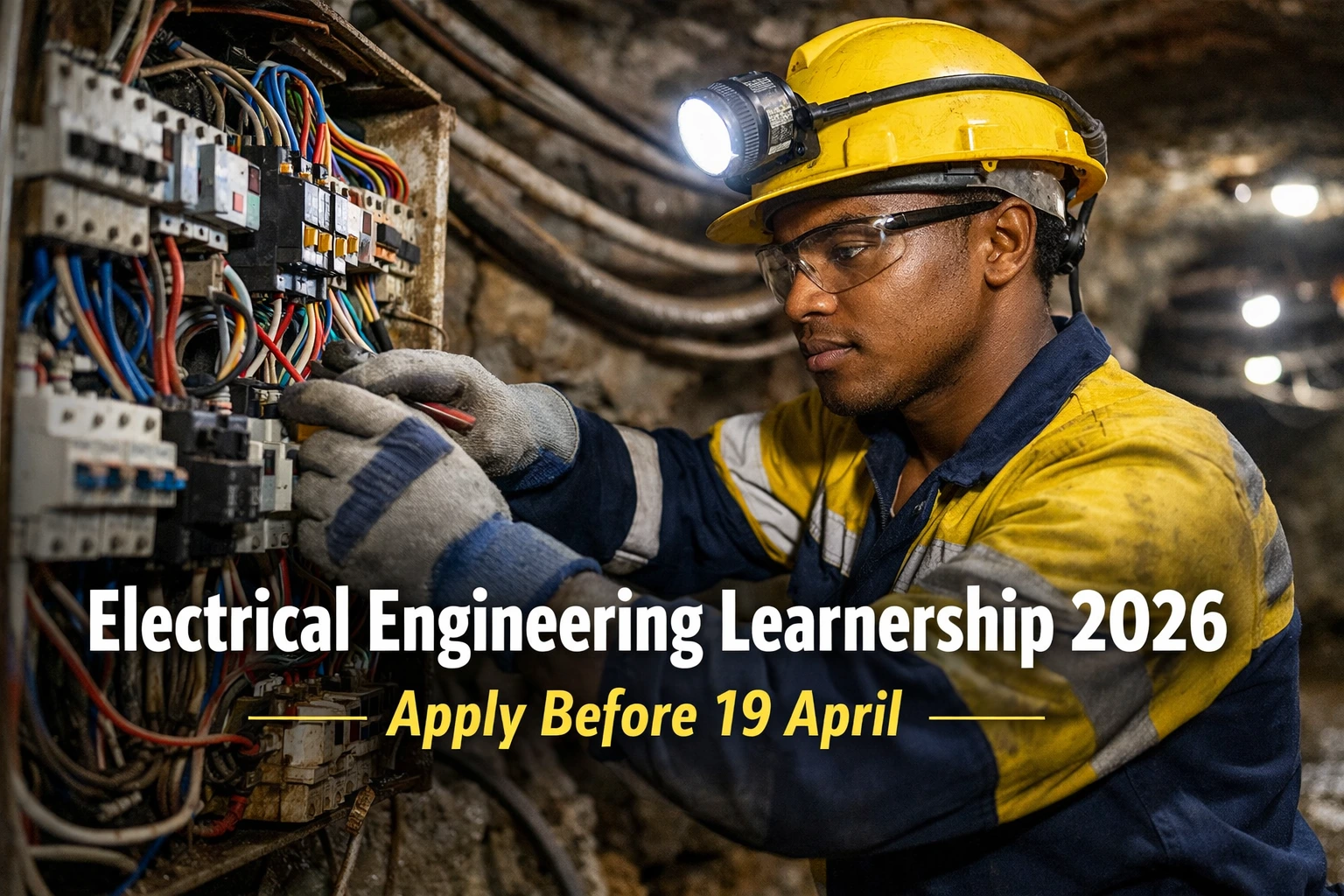
Discover everything about the Gold Fields Electrical Engineering Learnership 2026, including requirements, eligibility, training structure, and career prospects before the 19 April deadline.
Gold Fields Electrical Engineering Learnership 2026: A Serious Route Into Artisan Training
The Gold Fields Electrical Engineering Learnership 2026 arrives at a time when South Africa’s youth unemployment crisis remains deeply tied to limited access to practical, skills-based training. While many young people complete matric or even technical qualifications, the transition into real workplace experience continues to be a major barrier.
This is where structured engineering learnerships—especially those embedded in industrial environments like mining—are becoming increasingly important. Unlike short-term internships or theoretical courses, this programme offers a pathway that blends formal education with hands-on exposure in one of the country’s most technically demanding sectors.
For candidates within South Deep’s host communities, this is not just another learnership. It represents a focused, requirement-driven opportunity that could lead directly into artisan-level electrical training.
ALSO APPLY FOR Gold Fields Boilermaker Learnership 2026: A Strategic Pathway for N3 Candidates into Artisan Careers
Quick Facts: Gold Fields Electrical Engineering Learnership 2026
- Closing Date: 19 April 2026
- Location: South Deep Gold Mine, Gauteng
- Duration: Not stated in the official advert
- Positions Available: Not stated in the official advert
- Reference Number: Not stated in the official advert
- Stipend: Not stated in the official advert
- Required Gender: Not stated in the official advert
- Company Name: Gold Fields
Understanding the Gold Fields Electrical Engineering Learnership 2026
The Gold Fields Electrical Engineering Learnership 2026 is structured as a formal engineering development programme under the “Learner 18-2 UG – Electrician” role. It is designed specifically for individuals who want to pursue a career as an electrician within a mining environment.
What makes this programme particularly notable is its dual approach. Learners are not only exposed to theoretical instruction but are also placed in real underground mining operations where they apply their knowledge in practical scenarios.
This model reflects a broader shift in technical training across South Africa. Employers are increasingly prioritizing competency-based development, where learners demonstrate both knowledge and workplace readiness.
In this case, the programme aligns with standards set by the Mining Qualifications Authority (MQA), ensuring that training meets nationally recognized benchmarks for artisan development.
Why This Learnership Stands Out in South Africa’s Skills Landscape
One of the defining features of this learnership is its clear pathway toward artisan qualification. Many training programmes promise “experience,” but few are directly linked to long-term trade certification.
In South Africa, artisan skills—especially in electrical engineering—remain in high demand across industries such as mining, manufacturing, and infrastructure development. However, access to structured training pipelines has been inconsistent.
This is where Gold Fields’ approach becomes significant.
By combining:
- Mine-based technical exposure
- External training modules
- Performance-based progression
the programme creates a more predictable route into the electrical trade.
From an industry perspective, this aligns with the country’s broader push toward skills revitalization, particularly in engineering and technical fields where shortages persist.
Eligibility Requirements: A High-Barrier but Focused Opportunity
The entry requirements for the Gold Fields Electrical Engineering Learnership 2026 are deliberately strict, reflecting the technical demands of the role.
Applicants must have:
- Grade 12 with Mathematics and Science
- A full N3 qualification including:
- Engineering Mathematics
- Engineering Science
- Electrical Trade Theory
- Industrial Electronics
This requirement structure immediately filters out a large portion of applicants.
Unlike many entry-level learnerships that accept matric alone, this programme targets candidates who already have a foundation in electrical engineering theory.
From an analytical standpoint, this suggests two things:
First, the programme is not introductory—it is developmental, designed to build on existing knowledge.
Second, it reflects a growing trend where employers are shifting training responsibility toward candidates who have already invested in technical education.
The Host Community Requirement: Opportunity with Limitations
A critical condition of this learnership is that it is restricted to South Deep host communities, including areas such as Bekkersdaal, Westonaria, Simunye, and surrounding locations.
This requirement serves a dual purpose.
On one hand, it aligns with social and economic development commitments made by mining companies. By prioritizing local communities, companies aim to create employment opportunities in areas directly impacted by mining operations.
On the other hand, it significantly limits access for candidates outside these regions.
From a broader perspective, this highlights a recurring issue in South Africa’s learnership ecosystem: geographic exclusivity. While local prioritization is necessary, it can restrict wider access to high-quality training opportunities.
Workplace Reality: What Learners Should Expect
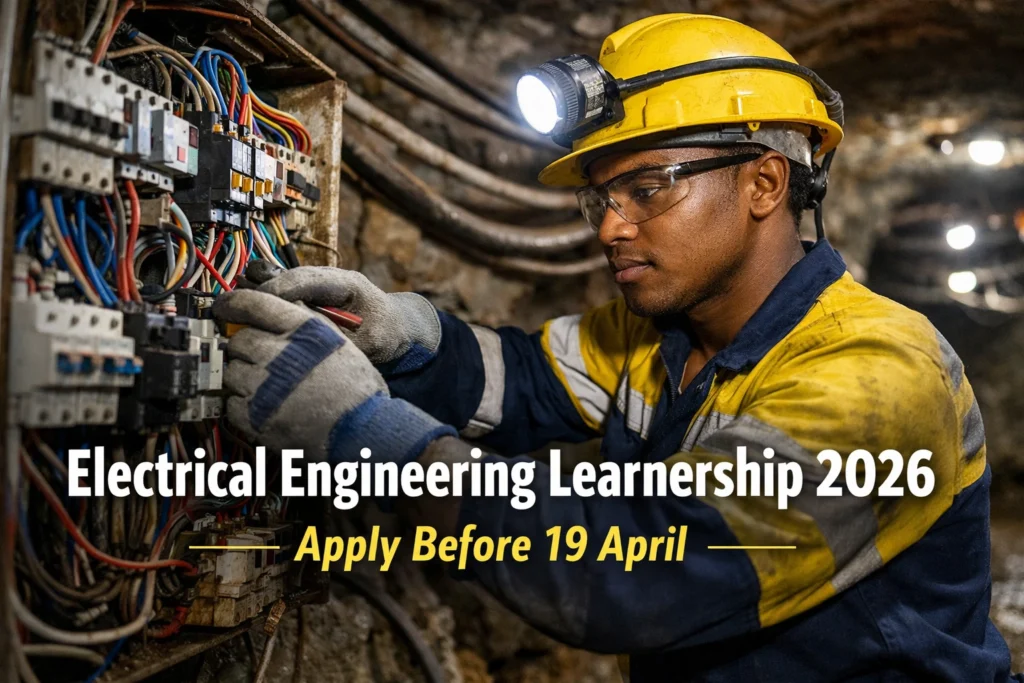
The Gold Fields Electrical Engineering Learnership 2026 is not a classroom-based programme. It is rooted in the realities of underground mining, where safety, discipline, and physical endurance are critical.
Learners will be expected to: Gold Fields Electrical Engineering Learnership 2026
- Follow strict health and safety protocols
- Wear prescribed personal protective equipment (PPE)
- Participate in technical and practical training
- Work collaboratively in team environments
- Maintain consistent performance standards
Additionally, candidates must pass: Gold Fields Electrical Engineering Learnership 2026
- A risk-based medical examination
- Heat tolerance screening
These requirements are not merely procedural—they reflect the high-risk nature of mining environments.
For many applicants, this will be their first exposure to such conditions. As a result, adaptability becomes just as important as technical ability.
Application Strategy: Why Documentation Matters More Than Ever
One of the most overlooked aspects of applying for structured learnerships is documentation quality.
Gold Fields has explicitly stated that all relevant certificates must be attached for an application to be considered. This includes:
- Matric certificate
- N3 qualification documents
- Additional supporting certifications
In highly competitive programmes like this, applications are often screened quickly. Recruiters typically look for immediate confirmation that a candidate meets the core requirements.
This means your CV should be structured in a way that highlights: Gold Fields Electrical Engineering Learnership 2026
- Mathematics and Science results
- N3 electrical subjects
- Any relevant technical exposure
From a strategic standpoint, this is about reducing friction in the selection process. The easier it is for recruiters to verify eligibility, the higher the chances of progressing to the next stage.
Industry Insight: The Role of Mining Learnerships in Career Development
Mining-based learnerships have historically played a significant role in South Africa’s technical workforce development.
Unlike corporate internships, these programmes offer: Gold Fields Electrical Engineering Learnership 2026
- Exposure to large-scale industrial systems
- Training on specialized equipment
- Real-world problem-solving experience
For electrical engineering learners, this environment provides a unique advantage. Skills developed in mining—such as fault diagnosis, equipment maintenance, and safety compliance—are highly transferable across industries.
This means that even beyond the mining sector, completing a programme like this can open doors in:
- Manufacturing plants
- Energy and utilities
- Infrastructure projects
In essence, the Gold Fields Electrical Engineering Learnership 2026 is not just about entering mining—it is about building a portable skill set.
What This Means Going Forward-Gold Fields Electrical Engineering Learnership 2026
Looking ahead, programmes like the Gold Fields Electrical Engineering Learnership 2026 are likely to become more important as South Africa continues to address its skills gap.
Several trends are shaping this shift: Gold Fields Electrical Engineering Learnership 2026
- Increased demand for certified artisans
- Greater emphasis on workplace-integrated learning
- Stronger alignment between industry and training institutions
For candidates, this means that technical qualifications alone may no longer be enough. Employers are looking for individuals who can demonstrate both knowledge and practical competence.
At the same time, the competitive nature of these programmes is expected to intensify. As more candidates pursue engineering pathways, meeting minimum requirements will not guarantee selection.
Instead, success will depend on: Gold Fields Electrical Engineering Learnership 2026
- Strong academic performance
- Clear documentation
- Demonstrated commitment to the trade
How do you apply for the Gold Fields electrician learnership?
Applications must be submitted through the official Gold Fields careers application portal.
A practical way to submit is to:
- Open the official application page
- Review the requirements carefully
- Click Apply now
- Complete the online application
- Attach all required certificates to your CV
- Submit before 19 April 2026
Frequently Asked Questions (FAQs)-Gold Fields Electrical Engineering Learnership 2026
Do I need both Matric and N3 to apply?
Yes. The programme requires Grade 12 with Mathematics and Science as well as a full N3 qualification with specific electrical subjects. Matric alone is not sufficient.
Can I apply if I am not from a host community?
No. This particular intake is restricted to South Deep host communities, and applicants outside these areas will not be considered.
Conclusion-Gold Fields Electrical Engineering Learnership 2026
The Gold Fields Electrical Engineering Learnership 2026 stands out as a structured, high-impact opportunity within South Africa’s technical training landscape. It is not designed for general applicants but for candidates who already meet strict academic and geographic criteria.
For those who qualify, however, it offers something increasingly rare: a clear, practical route toward becoming an artisan electrician.
The combination of mine-based experience, formal training, and industry alignment makes this more than just a learnership—it is a potential career foundation. But like all high-value opportunities, it demands preparation, attention to detail, and a strong understanding of what the role entails.
With the application deadline set for 19 April 2026, interested candidates have limited time to ensure their applications meet the required standard.