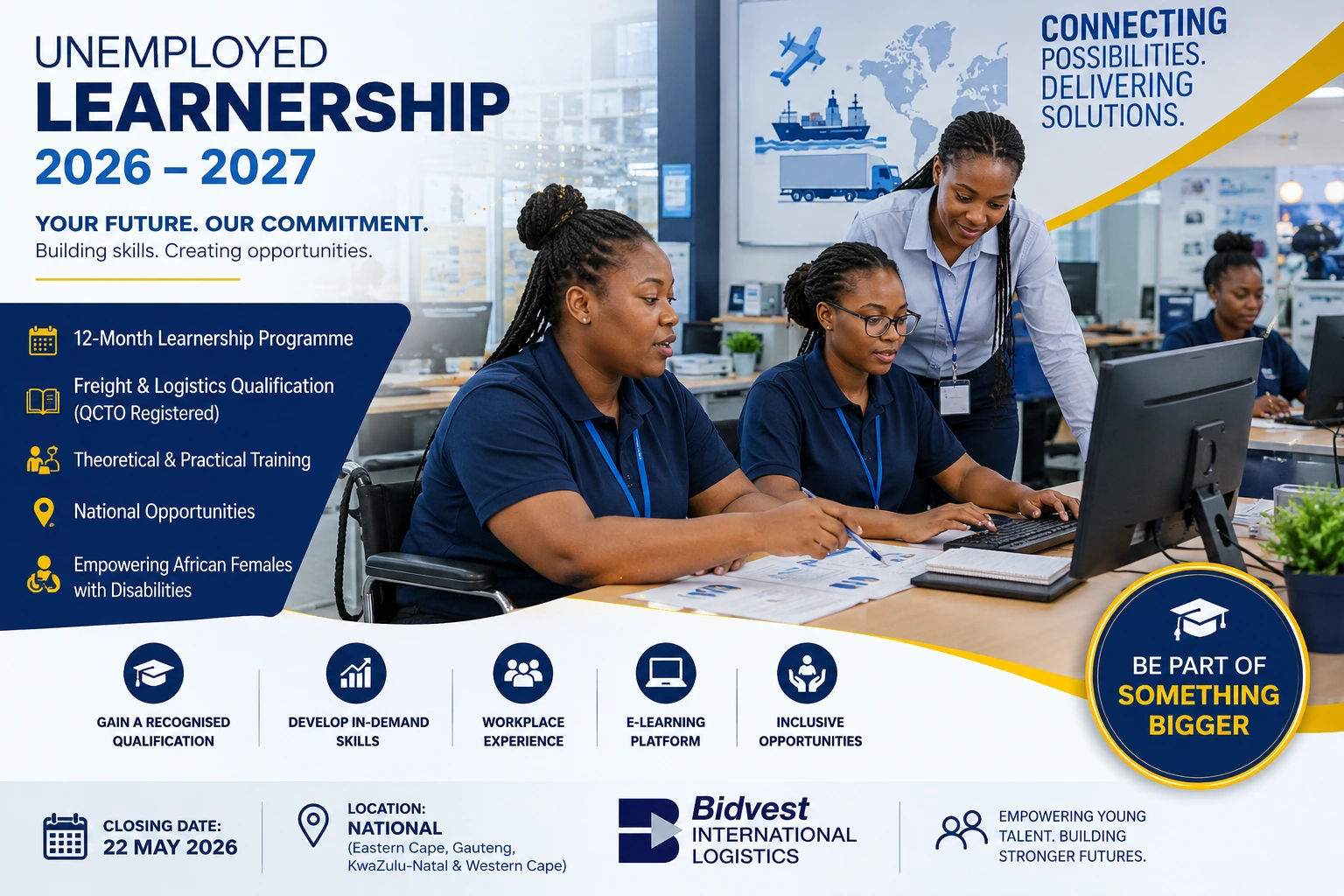
Explore the Unemployed Learnership 2026–2027 by Bidvest International Logistics—eligibility, benefits, and what it means for young South Africans seeking careers in logistics.
Unemployed Learnership (2026–2027): Why This Opportunity Matters Now
South Africa’s youth unemployment crisis continues to be one of the country’s most pressing socio-economic challenges. With unemployment rates among young people remaining persistently high, structured training programmes like the Unemployed Learnership 2026–2027 are no longer just opportunities—they are essential pathways into the workforce.
This particular programme, offered by Bidvest International Logistics, stands out not only because of its national reach but also due to its targeted focus on inclusion. By prioritising African females living with disabilities, it reflects a broader shift in corporate South Africa toward equity-driven talent development.
At a time when industries are evolving rapidly—especially logistics, which underpins global trade—this learnership presents a strategic entry point into a sector that is both resilient and expanding.
ALSO APPLY FOR NCIB Young Analyst Programme 2027: Requirements, Skills and How to Apply
Quick Facts: Unemployed Learnership 2026–2027
- Closing Date: 2026/05/22
- Location: National (Eastern Cape, Gauteng, KwaZulu-Natal, Western Cape)
- Duration: 12 months
- Positions Available: Not stated in the official advert
- Reference Number: BIL260422-1
- Stipend: Not stated in the official advert
- Required Gender: African females living with a disability
- Company Name: Bidvest International Logistics
Understanding the Unemployed Learnership 2026–2027 Programme
The Unemployed Learnership 2026–2027 is structured as a 12-month blended programme combining theoretical learning and practical workplace experience. It is registered through the Quality Council for Trades and Occupations (QCTO), which ensures that the qualification meets national standards and is recognised across industries.
What makes this programme particularly valuable is its dual approach:
- Theoretical Component: Delivered via an eLearning platform, allowing flexibility and structured progression.
- Practical Training: Exposure to real operational environments across three divisions within logistics.
This combination addresses a critical gap in South Africa’s education-to-employment pipeline—many graduates lack practical experience, making them less competitive in the job market. Learnerships like this directly tackle that issue.
Why Logistics Is a Strategic Career Choice in 2026 and Beyond
Choosing a career path is often about identifying sectors with long-term growth potential. Logistics is one such sector.
The global logistics industry has seen rapid transformation driven by:
- E-commerce expansion
- Supply chain digitisation
- Increased demand for efficient transportation networks
In South Africa, logistics plays a vital role in supporting trade, especially given the country’s position as a gateway to the African continent.
By enrolling in the Unemployed Learnership 2026–2027, participants gain exposure to:
- Freight forwarding
- Supply chain coordination
- Warehouse operations
- Transport management systems
These are not just job-specific skills—they are transferable competencies applicable across multiple industries.
Inclusion and Opportunity: A Focus on African Women with Disabilities
One of the most significant aspects of this learnership is its targeted inclusivity. Historically, individuals living with disabilities—particularly women—have faced systemic barriers to employment.
This programme signals a shift toward:
- Workplace diversity and inclusion
- Skills development for underrepresented groups
- Corporate accountability in social transformation
By creating opportunities specifically for African females living with disabilities, the programme aligns with South Africa’s broader transformation goals, including BBBEE (Broad-Based Black Economic Empowerment) initiatives.
However, it also raises important questions:
- Are enough companies following this model?
- Will participants be absorbed into permanent roles after completion?
While the learnership provides a strong foundation, long-term impact depends on sustained employment opportunities beyond the programme.
Eligibility and Expectations: Who Should Apply?
The Unemployed Learnership 2026–2027 has clear entry requirements:
- Grade 12 (Matric) or equivalent
- South African citizenship
- Age between 18 and 35
- Availability for full-time commitment over 12 months
- Interest in transport and logistics
Beyond formal qualifications, the programme emphasises behavioural competencies such as:
- Self-reliance
- Accountability
- Professional conduct
- Basic computer literacy
This highlights an important reality: employers are increasingly valuing soft skills alongside technical knowledge. In many cases, attitude and adaptability can be as important as academic performance.
The Role of Learnerships in Addressing Youth Unemployment
Learnerships have become a cornerstone of South Africa’s workforce development strategy. They serve multiple purposes:
- Bridging the skills gap
- Providing work experience
- Enhancing employability
The Unemployed Learnership 2026–2027 fits squarely within this framework. But its effectiveness should be analysed within a broader context.
While learnerships offer valuable experience, challenges remain:
- Limited absorption into permanent employment
- Inconsistent quality across programmes
- Lack of awareness among potential applicants
That said, programmes backed by established companies like Bidvest tend to offer higher credibility and better training structures.
Digital Learning and Workplace Readiness
Another noteworthy aspect of this programme is its reliance on an eLearning platform. This reflects a broader shift toward digital education and remote learning environments.
Participants will be required to:
- Complete modules online
- Build a portfolio of evidence
- Demonstrate competency through assessments
This approach has several advantages:
- Flexibility in learning
- Development of digital literacy
- Preparation for modern workplace environments
However, it also assumes access to reliable technology and internet connectivity—an issue that still affects many South Africans.
Risks, Realities, and Considerations Before Applying
While the Unemployed Learnership 2026–2027 offers clear benefits, applicants should approach it with realistic expectations.
Key considerations include: Unemployed Learnership 2026–2027
- Stipend Uncertainty: The advert does not specify payment, which may impact financial planning.
- Employment Outcomes: Completion does not guarantee a permanent job.
- Commitment Level: The programme requires full-time dedication for 12 months.
Applicants should evaluate their personal circumstances carefully before committing.
What This Means Going Forward-Unemployed Learnership 2026–2027
The Unemployed Learnership 2026–2027 is more than just a training programme—it reflects broader trends shaping South Africa’s labour market.
Looking ahead:
- Skills-based hiring will continue to rise, making practical experience increasingly valuable.
- Inclusive hiring practices are likely to expand, especially in large corporations.
- The logistics sector will remain a key economic driver, creating ongoing demand for skilled workers.
For policymakers, programmes like this highlight the importance of partnerships between government, education providers, and the private sector.
For individuals, it reinforces a critical message: gaining experience—even through temporary programmes—can be a stepping stone to long-term career growth.
How to Apply for Unemployed Learnership 2026–2027
APPLY HERE Unemployed Learnership 2026–2027
FAQs-Unemployed Learnership 2026–2027
1. Does the Unemployed Learnership 2026–2027 guarantee a job after completion?
No, the programme does not guarantee permanent employment. However, it significantly improves your chances by providing practical experience and a recognised qualification.
2. Is a stipend provided during the learnership?
The official advert does not specify whether a stipend is offered. Applicants should confirm this during the application process.
Conclusion-Unemployed Learnership 2026–2027
The Unemployed Learnership 2026–2027 represents a meaningful opportunity for young South Africans—particularly African women living with disabilities—to gain entry into the logistics industry. It combines structured learning with real-world experience, addressing one of the biggest barriers to employment: lack of practical exposure.
While it is not a guaranteed pathway to permanent employment, it offers something equally valuable—skills, experience, and industry insight. For many, that is the first and most crucial step toward building a sustainable career.