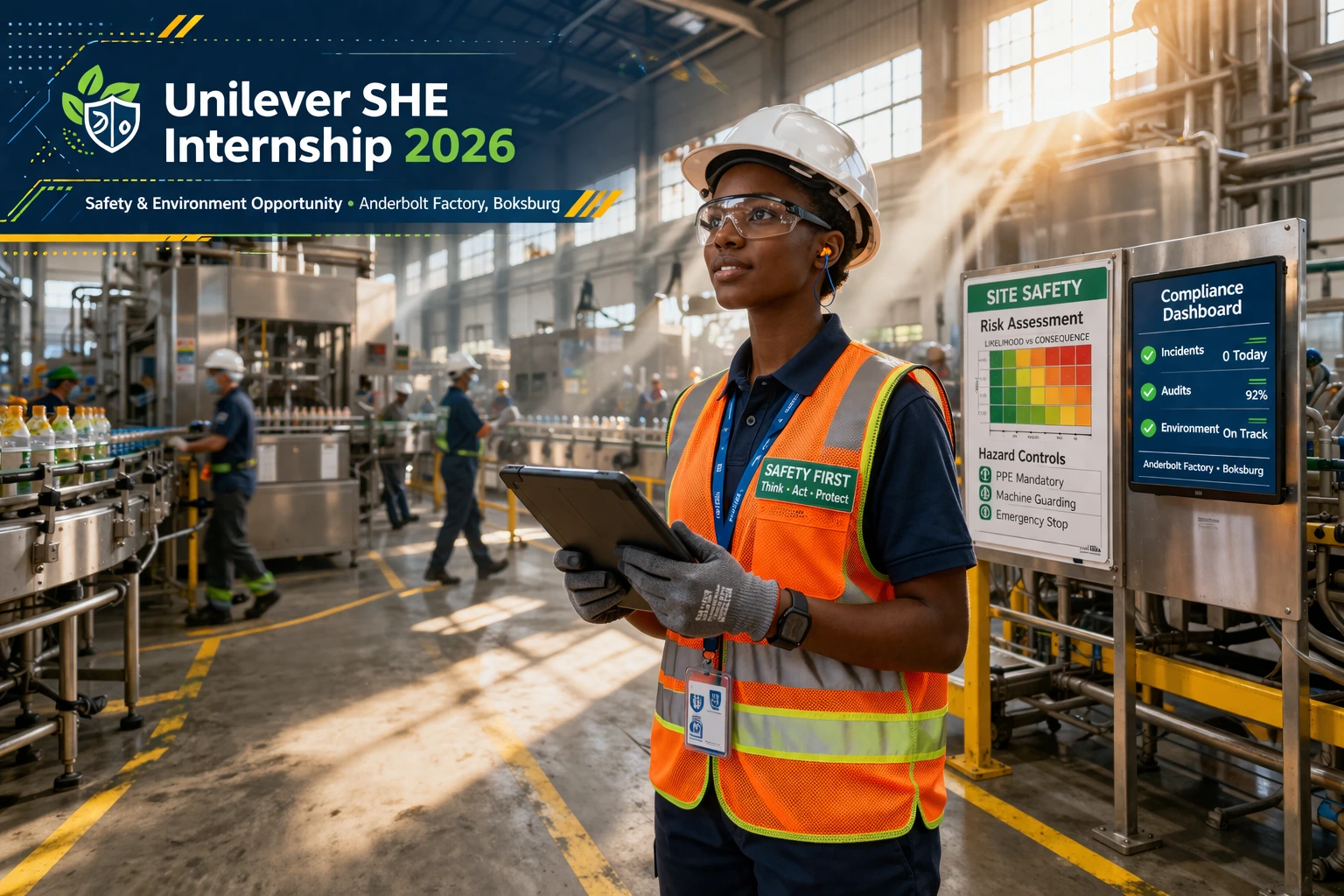
Apply for the Unilever SHE Internship 2026 in Boksburg. Learn about requirements, duties, deadlines, and how this safety & environment opportunity can shape your career.
The hum of machinery begins before sunrise. Inside a busy production facility on the industrial edges of Boksburg, reflective vests flash under warehouse lighting as supervisors review daily safety checklists. A young graduate stands near a digital notice board, nervously adjusting their helmet. Today is their first day as a Safety, Health, and Environment intern — and the stakes feel real.
Factories like this do not pause for hesitation. Every shift demands precision, awareness, and responsibility. That’s precisely why the Unilever SHE Internship 2026 has become one of the most talked-about graduate opportunities in South Africa’s manufacturing sector.
Offered by global consumer goods leader Unilever, this internship provides practical exposure to workplace safety, environmental compliance, and risk management — skills increasingly vital in today’s evolving industrial landscape.
For graduates eager to transition from theory to meaningful professional impact, the programme represents more than a CV booster. It’s an entry point into a career where safeguarding people, processes, and the planet intersect daily.
A Factory Floor Classroom in Gauteng
Unlike traditional office-bound internships, the Unilever SHE Internship 2026 places participants directly inside a high-energy production environment. The Anderbolt facility, located in the broader Gauteng industrial corridor, functions as a micro-ecosystem of logistics, manufacturing, and compliance activity.
Graduates stepping into this space quickly learn that safety isn’t a checklist exercise. It’s a culture shaped through constant observation, communication, and proactive intervention. Interns often find themselves shadowing safety leads during contractor inductions, participating in incident investigations, and analysing environmental performance data.
This real-time immersion builds confidence. It also helps interns understand how policy translates into action — a gap that many university programmes struggle to bridge.
The exposure becomes particularly valuable in South Africa’s job market, where employers increasingly prioritise candidates with demonstrable workplace experience rather than purely academic credentials.
Understanding the Role: What “SHE” Means in Practice
In corporate language, “SHE” stands for Safety, Health, and Environment. But in operational reality, it means preventing injuries, ensuring regulatory compliance, and reducing environmental harm — often simultaneously.
Interns in the Unilever SHE Internship 2026 are expected to contribute meaningfully to this mission. During the 12-month programme, responsibilities typically include:
- Supporting risk assessments to identify workplace hazards
- Updating safety procedures and documentation
- Assisting with root-cause investigations after incidents
- Managing internal safety communication channels
- Driving corrective actions following hygiene or housekeeping audits
These tasks are not simply administrative. They require observation skills, analytical thinking, and the ability to influence behaviour — qualities that can take years to develop without hands-on exposure.
For many interns, the most transformative aspect is participating in improvement projects. Unilever’s structured expectation that interns own two key initiatives allows graduates to showcase measurable impact, whether reducing waste streams or improving emergency response readiness.
Who Should Consider the Unilever SHE Internship 2026?
The internship is primarily designed for graduates who have completed qualifications in safety or environmental disciplines. Eligible fields typically include:
- Occupational Health and Safety
- Environmental Science or Management
- Risk Management
Candidates with advanced qualifications in environmental sustainability often gain a competitive edge during shortlisting. Yet beyond academic credentials, recruiters increasingly evaluate passion and alignment with organisational values.
In interviews, applicants who demonstrate genuine interest in workplace wellbeing, sustainability practices, and operational efficiency often stand out. The ability to communicate these motivations clearly can influence hiring decisions as much as technical knowledge.
The Strategic Importance of Safety Careers in 2026
The growing visibility of programmes like the Unilever SHE Internship 2026 reflects broader economic trends. South Africa’s industrial sectors are undergoing technological upgrades, supply chain restructuring, and stricter compliance monitoring.
This transformation has elevated the importance of safety professionals. Companies are no longer viewing safety roles as compliance obligations alone; they are strategic contributors to productivity, brand reputation, and workforce morale.
Manufacturing disruptions caused by workplace incidents can cost millions. Environmental violations can damage corporate credibility overnight. As a result, organisations are investing more in early-career pipelines that cultivate skilled safety practitioners.
Internships therefore serve as both training platforms and talent scouting mechanisms.
Expert Insight: Why Early Exposure Shapes Long-Term Impact
From an industry perspective, internships like this create ripple effects beyond individual employment outcomes.
Early exposure to high-stakes operational environments helps graduates internalise safety culture at a formative stage. Instead of learning compliance as a bureaucratic requirement, interns begin to see it as a leadership responsibility.
This mindset shift has long-term implications. Professionals who develop safety instincts early often become influential change agents later in their careers. They can drive behavioural transformation, improve reporting transparency, and champion sustainable practices across departments.
In a country where workplace injury statistics remain a concern in certain sectors, building such leadership capacity is essential.
Navigating the Application Process
Applying for the Unilever SHE Internship 2026 requires careful attention to detail. The company’s recruitment system is known for strict documentation standards, and incomplete submissions may lead to automatic disqualification.
Key steps typically include:
- Preparing a professional CV highlighting relevant coursework or projects
- Uploading an official qualification certificate (not a statement of results)
- Searching the global recruitment portal using terms like “SHE Intern” or location keywords
- Monitoring communication timelines — feedback often arrives within two weeks
Candidates are also encouraged to tailor their application narratives. Demonstrating how personal values align with workplace safety and environmental stewardship can strengthen credibility.
In competitive cycles, authenticity often resonates more than generic career aspirations.
Local Relevance: Opportunities in South Africa’s Industrial Economy
Internship programmes at multinational companies hold particular significance in the South African context. Youth unemployment remains one of the country’s most pressing socio-economic challenges, and structured workplace exposure can help bridge the transition from education to employment.
Facilities in regions like Gauteng play a pivotal role in this ecosystem. Industrial hubs not only create direct jobs but also support surrounding logistics, services, and training networks.
By investing in graduate programmes, companies indirectly strengthen community resilience. Interns who complete such initiatives often go on to secure permanent roles, pursue further study, or contribute entrepreneurial solutions within their sectors.
SEE ALSO: UNISA Internships 2026: How to Apply and Stand Out as a Graduate Applicant
What Makes This Internship Stand Out-Unilever SHE Internship 2026
Several features distinguish the Unilever SHE Internship 2026 from typical graduate placements:
First, the operational intensity of the Anderbolt site ensures that learning is continuous and experiential. Interns are rarely confined to observation; they are expected to contribute from early stages.
Second, the structured project ownership model enables measurable achievements. Graduates leave with tangible evidence of impact rather than vague participation claims.
Third, exposure to global safety standards enhances employability beyond national borders. Experience within a multinational compliance framework can open doors in diverse industries.
Together, these elements position the programme as a strong foundation for long-term career growth.
Where To Apply
APPLY HERE: Unilever SHE Internship 2026
ALSO APPLY FOR: Intern Packaging Engineering at Heineken Beverages: Wadeville
Frequently Asked Questions
1. Is the Unilever SHE Internship 2026 paid?
Compensation structures vary by intake cycle, but most corporate internships in this category offer stipends or entry-level remuneration aligned with graduate programmes.
2. Can final-year students apply?
Generally, candidates must have completed their qualification and obtained an official certificate before applying. Submitting provisional documentation may result in disqualification.
3. What happens after the internship ends?
While permanent placement is not guaranteed, successful interns often gain strong references, industry connections, and improved employability within safety-focused roles.
The Bigger Picture: Building a Safer Future Through Opportunity
Standing on a factory floor for the first time can feel overwhelming. The noise, pace, and responsibility challenge everything graduates thought they knew about workplace dynamics. Yet it is precisely in these moments that professional identity begins to take shape.
The Unilever SHE Internship 2026 represents more than a temporary position. It symbolises a shift toward proactive workforce development, where companies and graduates collaborate to create safer, more sustainable industries.
As global supply chains become more complex and environmental pressures intensify, the need for skilled safety practitioners will only grow. Programmes like this serve as gateways — not just into employment, but into purposeful careers that influence how businesses operate and communities thrive.
For graduates willing to embrace challenge, curiosity, and accountability, the opportunity is clear. Safety is no longer a background function. It is a leadership pathway shaping the future of work in South Africa and beyond.
Conclusion
In a competitive graduate job market where practical experience often makes the difference, the Unilever SHE Internship 2026 stands out as a meaningful stepping stone into the world of safety, health, and environmental management. It offers more than workplace exposure — it provides an opportunity to develop responsibility, confidence, and real operational insight inside one of South Africa’s busiest industrial environments.
For graduates who are passionate about protecting people, improving systems, and supporting sustainable business practices, this internship can shape both professional direction and long-term career potential. The experience gained on a dynamic factory floor in Boksburg can translate into stronger employability, clearer career purpose, and the ability to contribute to safer workplaces across industries.
Ultimately, programmes like this reflect a broader shift in how companies develop future talent. By investing in early-career professionals who understand safety culture and environmental responsibility, organisations are helping build a more resilient workforce — and a more sustainable economy. For the right candidate, the journey that begins with an internship could lead to a lifelong role in shaping how work gets done, safely and responsibly.